ADRENAL HEALTH

Hormones are chemicals that are made by your endocrine glands. The glands release hormones into your bloodstream to be carried to the appropriate body part.

It’s difficult for you to function properly when your hormones are out of balance. A hormone imbalance can cause weight gain or mood swings that affect your day-to-day life. Taking hormones can help people whose bodies don’t make enough of a certain hormone, or whose hormone levels are unbalanced.

Bioidentical hormones are just one type of man-made hormones available. Of all the hormones out there, the bioidentical type is the closest to the real thing. These hormones are chemically identical to the ones your body makes, so you can absorb them easily. Bioidentical hormones are made in a laboratory and can come in different forms.

LATEST BLOGS

What Is A Good Alternative to Kavinace?

Kavinace is off the market. Where did Kavinace go? And What Do I Do Now? Kavinace by Neuroscience is no longer available for sale as a dietary supplement.  In mid-April 2019 Neuroscience and several other companies received warning letters from the FDA saying that they cannot make products containing 4-amino-3phenylbutyric acid anymore. Reason being, the FDA says that 4-amino-3phenylbutyric acid is not technically qualified as a dietary supplement.   Kavinace has been a great product that my patients and myself have used for many years.  I’ve found that it really helps you to “stay asleep.” For many of us, we have no problem falling asleep, but a terrible time staying asleep through the night.  Either you would wake up after 3-4 hours for at least an hour. Or you would wake up multiple times a night. Needless to say, resulting in an unrestful night of sleep.  Kavinace worked great to help stay asleep. It is not a sleeping pill.  So you would never wake up feeling groggy. And if for some reason, if you had to wake up in the middle of the night, you could easily have a coherent conversation or drive a car.  That was what made Kavinace so great. If you are reading this, you are well aware that Kavinace is not available.  So what next? What can you do if you cannot take Kavinace anymore? Do I need to wean off of Kavinace? Am I going to go through withdrawals? Am I ever going to get rested sleep ever again? To answer these questions we have to answer, why did Kavinace work in the first place?  It contains a small, yet effective amount of 4-amino-3phenylbutyric acid. This is a derivative of the neurotransmitter GABA, which can cross the blood-brain barrier. In doing so, this can help with calming and reducing cortisol.  So if you wake up in the middle of the night, your mind doesn’t go too all the places and things and stressors that you have in your life.  It also contains Taurine, is a great amino acid that is also considered to have a positive impact on GABA. Is Kavinace like those bizarre google internet searches I saw about Phenibut? No, Kavinace is not like the high doses that people take of Phenibut for “recreational” purposes.   Do I need to wean off of Kavinace since I cannot take it anymore? Am I going to have withdrawals because I can no longer take it? I have not found Kavinace to be habit forming.  If you were to stop taking it, after a few days your sleep patterns may go back to what they were initially.  You will not go through any “withdrawal” process. But your sleep will not be any worse than it was previously to taking Kavinace. What can I take in replacement of Kavinace that is actually going to work? Kavinace was a very helpful dietary supplement for helping support sleeping through the night.  It is unfortunate that we cannot obtain it anymore. But here are some options to replace Kavinace for staying asleep.   These products contain specifically, PharmaGABA, which is a unique form of GABA that can be absorbed in the GI tract and cross the Blood-brain barrier.   I am going to explain these products that I use in replacement of Kavinace to see what might fit your situation.  Now I have to reiterate the “disclaimer”…this is not meant for medical advice, please ask your doctor and if your doctor doesn’t know, get a new doctor, and this information is intended for educational purposes only, etc.         CereVive by Ortho Molecular Products: This dietary supplement is easily replaceable to Kavinace.  CereVive contains the PharmaGaba which as mentioned above is an absorbable form of GABA.  It will support GABA like Kavinace to help you stay asleep. It also has Mucuna Pruriens Extract that is standardized to contain 10% of L-Dopa, which is a precursor to the neurotransmitter Dopamine. Dopamine is an amazing neurotransmitter.  It helps with focus, concentration, and motivation.  Dopamine is also part of the reward pathway, which in essence is the pleasure neurotransmitter.  Sounds good? Not for everyone, because if you are a type-A personality, that is already hyper-focused and task-oriented and maybe a bit of an anxious nature (yes, that is me), then taking mucuna is a no-no.  CereVive also has 5HTP (5-hydroxytryptophan), which is a precursor to serotonin. Serotonin is the happy-neurohormone. It’s important for sleep, appetite craving control, happiness/mood control. Which not to complicate everything, dopamine has a hand in this as well.   So it is important to have a balance of these neurohormones.  Both mucuna and 5HTP are contraindicated with certain medications, particularly antidepressants meds. This may not be an option for you depending on your meds and situation.   CereVive also has taurine in it as well, just like Kavinace.  While CereVive can help you stay asleep, just like Kavinace did, it is also helpful for stress and mood.   Again the “disclaimer,” but let’s say you are a good candidate for CereVive.  Then taking 2-4 capsules before bed would replace Kavinace. PharmaGABA by Designs for Health:   This dietary supplement has 100mg of chewable PharmaGABA per tablet.  Perhaps you are not a good candidate for CereVive. Or perhaps you don’t need something as complex as CereVive.  Then PharmaGABA is a great option for staying asleep through the night. Again, as mentioned PharmaGABA is absorbed easily.  It is made with the amino acid, glutamic acid and fermented with beneficial bacteria Lactobacillus hilgardii.  Because it is chewable, means it is absorbed quickly. This easily absorbed chewable tablets also make it easier to fall asleep. If you have no trouble falling asleep, make sure to take this right before you go to bed.  If you feel that PharmaGABA fits for you …. Again, “disclaimer,” chew one to two tablets before bed. Let’s say, you are a real ‘tough sleeper.’ Or you’re really worried about not having your Kavinace and feel you really need

Read More
Why Can’t I Fall Asleep and Stay Asleep? Questions from Readers

One of the most common issues we hear from our patients is trouble sleeping. People often have trouble falling asleep and also trouble staying asleep. Both are related the adrenal hormone cortisol. We have been getting a lot of questions about sleep, so below are two questions from a couple of readers. Question from Norma, 53 yo female:  Hi, I’m between the ghoul and the poltergeist. I use to sleep all night now I’m lucky to sleep from 9pm/12am to 1/2 am Or 1/3am or 2/5am.  Sometimes I’m up 4/5x night. I’m 53 and take hormones. Sometimes I’m so tired from not sleeping through the night… Dr. Davidson’s Reponse:  This question is in reference to an article we wrote on cortisol and how it affects sleep and daytime energy.  Cortisol is released from your adrenal glands in a diurnal fashion. In a perfect world, the cortisol secretion is highest in the morning and will wan through the day and drop dramatically at night. This pattern follows the sun. As the sun rises, our cortisol goes up and as the sun sets, our cortisol is supposed to go down. This reflects our energy levels in that high cortisol in the morning helps us wake up and get going for the day.  The cortisol will stay elevated in the day for daytime productivity. Then will drop at night so that it is easy to fall asleep and stay asleep all night.   In our article, we mention three profiles that reflect when cortisol secretion has gone wrong.  We are not making light of adrenal fatigue and the havoc it can wreak in our lives. But these three profiles are easily learnable and understandable.   The three profiles are the Vampire, the Ghost, and Zombie  The Ghost is broken up into two distinctions: the Ghoul and the Poltergeist.  Real quick to explain, the vampire is the person that has high cortisol at night and low cortisol in the morning.  The Vampire will stay up late, having a tough time falling asleep at night. And will have a terrible time waking up in the morning and will be tired all morning if not the afternoon as well.  The Zombie has low cortisol levels all day and night long. Meaning Zombies are tired all day and night long. They can sleep for hours and still say they are “soooooo tired.”  Ghosts are the people that have no trouble falling asleep but will wake up in the middle of the night. There are two variants of the Ghost.  There is the Ghoul, that wakes up after 4 hours and cannot go back to sleep.  Ghouls roam the halls, play on their phone, get some household work done, might have a small meal, watch TV.  Ghouls can be up from 1-3 hours in the middle of the night. And by the time a Ghoul is tired and fall asleep they have to wake up soon after to start the day.  Poltergeists wake up all night long. It is really irritating to fall asleep only to wake up 30 min to one hour later. And they do this over and over again. Poltergeists only get a series of small naps all night. Therefore they are so very tired in the day. Back to Norma and her question about whether she is a ghoul or a poltergeist.  There are so many variants of the Vampire, ghost(s) and Zombies as we are all unique individuals.  But Norma is a Ghost. Norma is a hybrid of Ghost: a PolterGhoul. Once a vampire falls asleep, they generally stay asleep all night, if not all morning long.  But Norma is waking up too frequently in the night for extended amounts of time. This means her cortisol is spiking in the middle of the night, multiple times.   So basically Norma is getting a series of small naps all night long.  That is because her cortisol is bouncing up and down all night long. Why is this happening? Well, most often it is from stress. If there is a lot of stress going on (whether that is good-stress or bad-stress, it is still stress.   Chronic stress will raise cortisol at night.  Now I am sure Norma cannot make the stress go away because we all have “life” to deal with.  But she can reduce the cortisol at night to help her sleep better. Balancing her blood sugar is the first start.  Having a bedtime snack before bed will balance her blood sugar, keeping her cortisol from spiking in the night. To put this another way, if you eat dinner at say 6 pm.  But you have nothing after dinner. Come 2 am, you have not eaten in 8 hours.  This can cause your blood sugar to drop. When your blood sugar drops, your adrenal glands will secrete cortisol to tell your liver to do a process called gluconeogenesis.   Gluconeogenesis is a process that your liver can do to make blood sugar/glucose without even have eaten anything.  But in this process, the rise in cortisol will wake you up in the middle of the night. One easy thing that Norma can do is have a bedtime snack of protein and carbohydrates.  Also taking supplements that reduce cortisol at night would be helpful for Norma/Ghost. I have to say this, or my attorney will give me a verbal flogging: this is for educational purposes and not medical advice, etc… So these are my suggestion for reducing the cortisol: Supplementation:  Cortisol Manager: this is a great blend of herbs and minerals to lower cortisol at night.  This is a nice supplement to take if you have a lot of stress on your plate or there a lot on your mind.  It is not a sleeping pill but helps to reduce cortisol for better sleeping. Kavinace: this is a great amino acid supplement that is a precursor to GABA.  GABA is a huge molecule that is hard to digest. By taking the precursor to GABA can

Read More
11 Tips on How to Improve Sleep with Adrenal Fatigue

Adrenal fatigue can have a significant impact on sleep.  The main cause being that in adrenal fatigue the adrenal glands release cortisol in a dysfunctional manner.  The adrenal glands release cortisol in a 24-hour diurnal curve. In a perfect scenario: Cortisol is highest in the morning and will slowly decrease over the afternoon. At night cortisol is supposed to be low that way we fall asleep.   In adrenal fatigue, the cortisol is not secreted correctly causing trouble sleeping. As you might have read in my other posts on adrenal fatigue, there are several types of sleep disruption.  I call them the Vampire, the Ghoul, and the Poltergeist. I do not mean to make light of adrenal fatigue, as it can compromise a person’s life dramatically. But I find it easier to remember the concepts when I can create easily relatable themes. In this post, I am going to describe the three common disrupted sleep patterns and give you 11 tips to improve sleep with adrenal fatigue. Three common patterns of sleep disruption in adrenal fatigue: The Vampire: Trouble Falling Asleep:  This is the most common pattern seen in adrenal fatigue.  The cortisol is too high at night, making it difficult to fall asleep. Consequently, the cortisol is low in the morning.  This causes trouble waking up and fatigue in the morning. You might be a Vampire, or I am sure you know several.  These are the people that come alive at night but are exhausted in the mornings.  They can stay up and burn the midnight oil. But forget morning meetings, they are either still in bed or cognitively incoherent. The Ghoul: Waking up in the middle of the night:  These people have no trouble falling asleep. But they cannot stay asleep.  They will sleep hard to 2-4 hours and then will be wide awake in the middle of the night.  It will take 1-3 hours to fall back asleep. And during that 1-3 hours, you can find them roaming the house, looking at their phones and pondering every possible stressor in their and their family’s lives.   And by the time they do fall asleep, their morning alarm rings shortly after that. Their cortisol pattern is low in the evening. But the middle of the night the cortisol spikes causing them to wake up for 1-3 hours in the middle of the night. The Poltergeist: Waking up multiple times in the night:  These people fall asleep fine. But they find themselves waking up 3-6 times a night.  It is irritating and even anxiety provoking to wake up so many times in the night. The second you fall asleep, disturbingly only to wake up 45 min to an hour later for no reason.  It not like the dog woke you up, or there was some loud party next door. The Poltergeist is just annoyingly being woken all night long for no good reason. Then come morning they are exhausted and feel like they did not get restful sleep.  This disrupted sleep pattern is because the cortisol is bouncing up and down all night. The goal here is to re-establish the proper diurnal curve of cortisol.  Bringing the cortisol down at night and keeping it low all night so you can get a good night’s sleep. 11 Tips on How to Improve Sleep with Adrenal Fatigue To start I have to state the “disclaimer”…this is not meant for medical advice, please ask your doctor and if your doctor doesn’t know, get a new doctor, and this information is intended for educational purposes only, etc. 1. Balance blood sugar at night: Cortisol helps to raise blood sugar.  If our blood sugar drops while we are sleeping, your adrenal glands naturally release cortisol.  This increase of cortisol will cause you to wake up in the middle of the night. A lot of people eat dinner early, at 5:30-630 pm.  If your last meal was at 6 pm, by the time 2 am hits your blood sugar can drop causing the cortisol to rise to keep your blood sugar from getting too low.  Having a small bedtime snack of protein can maintain your blood sugar level all night. Protein sources such as nuts, hard boiled egg, small protein shake are great ways to balance your blood sugar at night.  You want something small (about 100 calories) and consisting mainly of a protein source. 2. No intense exercise after 12 pm:  Exercise, especially cardiovascular exercise raises cortisol.  If you exercise after 12 pm noon, your cortisol will rise causing elevated levels at night.  Exercise is very healthy for adrenal fatigue and health. But keep your workout to the morning.  Walking is one of the best activities for adrenal fatigue. It is not stressful to the body and will not raise cortisol like intense cardiovascular exercise.  Doing intense metabolic conditioning can be detrimental to adrenal fatigue. Hardcore cardio will rapidly spike cortisol. This not only disrupts sleep but also causes an imbalance in insulin and glucose.  ‘Shelley’ a patient of mine is a perfect example. Every night after work, Shelley would go to the gym to do a spin or boot camp class.  She complained that not only did she have trouble sleeping at night, she also couldn’t lose weight. In fact, she kept gaining weight, especially in the belly.  Shelley complained that she was tired all the time. And she was always late for work in the morning because she kept pressing snooze on her alarm. Even though Shelley tried to eat healthily, the carb cravings were insatiable.  I convinced Shelley to stop exercising altogether. This was to help get the cortisol levels regulated. Between the cessation of the intense cardio, hormone balancing and adrenal supplementation Shelley started to feel better. She slept better and started waking up earlier.  She began walking in the morning before work. The cravings decreased, and she lost weight. 3. Raising Phosphatidylserine levels at night: Phosphatidylserine helps to reduced cortisol levels.  When taken at night phosphorylated serine can help you fall asleep

Read More
Can Cortisol Affect Sleep?

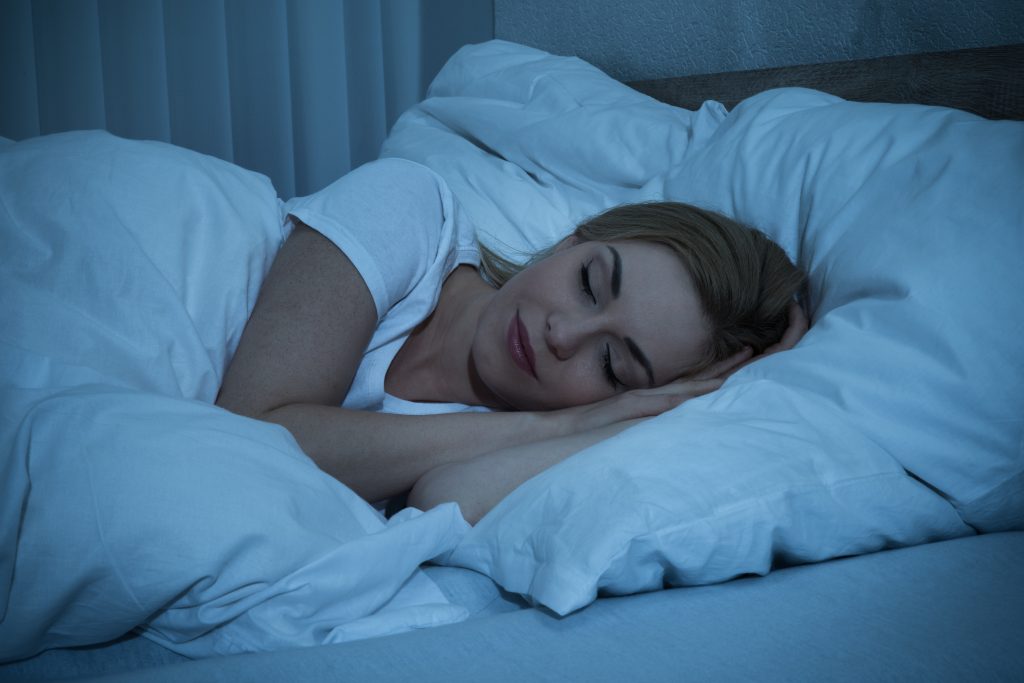
Yes, cortisol can affect your sleep.  It can cause: Insomnia Waking in the night Falling asleep before the sun sets Cannot get up in the morning Exhaustion during the day Not to mention, poor sleep over time can negatively affect your waistline, immune function, and mood. I am going to explain further why cortisol levels affect sleep.  First, I need to take a moment to explain a little about the magic of cortisol.  Bear with me, and I promise I’ll try not to bore you with the anatomy and physiology. Cortisol comes from the adrenal cortex and is a glucocorticoid.  Your adrenal glands sit right above your kidneys and secrete a lot of hormones, cortisol being one of them.  Cortisol is necessary for life, and we cannot live without it. One of the primary functions of cortisol is to help us get from meal to meal.   Cortisol raises your blood sugar to prevent hypoglycemia if we go through a prolonged amount of time without food.  Cortisol is also released along with adrenaline (norepinephrine/epinephrine) in times of stress. This helps us ‘fight or flight’ from whatever predator is attacking us.   Now in our society, we are not going to be attacked by a tiger.  Unless you have an Asian tiger-mom as I do, then I suggest flight. Most definitely, flight would be the best option.  Also in our society, we are not going to starve. Food is plentiful. We do not need to go and hunt and gather our food.  I can sit on my butt and have someone deliver it so I can binge out on chicken korma and Handmaid’s Tale. But while we are not running from The Predator and not living a version of Naked and Afraid, we still live in a state of perpetual stress.  The news, family crisis (aka drama), work, neverending emails and voicemails, traffic, time management, internet trolls. Our adrenals cannot differentiate between Michael Myers brandishing a butcher knife and your critical bullish boss.  Now your boss is not going to kill you like Michael Myers, but your adrenals still respond the same way. Your adrenals secrete a load of adrenaline and cortisol when you have to deal with everyday crazy-deadlines and crazy-clients.  The same way it would if you saw your child’s American-Girl-Doll, Samantha’s head spin around on its own in the middle of the night. Our chronic everyday stressors are what triggers cortisol to become released in a dysfunctional manner creating sleep issues. Okay, a little more physiology here.  Cortisol gets released from the adrenal glands in a diurnal fashion. In a perfect world, cortisol is secreted highest in the morning, so we wake fresh and bright-eyed.  It starts to reduce in the afternoon and drops significantly in the evening so we can fall asleep quickly and get a good night’s rest. As mentioned above, stress from our life can cause this diurnal curve to get altered.  This change in cortisol secretion can dramatically affect our sleep, consequently disrupting how we feel in the day. Dysfunctional secretion of cortisol from the adrenals is what affects our sleep.  In practice, I have seen three major patterns emerge. I refer to these three types, or patterns as The Vampire, The Ghost, and The Zombie.  I will reference these types often in other blogs. Because these types of adrenal fatigue have lots of symptoms ranging from sleep to weight gain, brain fog, hormonal imbalances, fatigue and more.  But for this blog, I am going to try and stick to how cortisol affects our sleep. The Vampire: The vampire had high cortisol in the evening and low cortisol in the morning and evening.  This is often referred to as a “Reverse Diurnal Curve.” As mentioned above, in a perfect world our cortisol is elevated in the morning and comes down at night.  In the case of the Vampire, they are the opposite of bright eyed and bushy tailed in the morning. Vampires are exhausted in the morning. They have to drag themselves to get up and get going for the day.  But come nighttime, they are awake and lively. Vampires cannot fall asleep at night and can stay up past midnight. Vampires can get stuck in the rut of taking sleeping pills and lots of coffee/soda/caffeine in the morning. A vampire’s cortisol is elevated at night, which is why they cannot fall asleep.  And their cortisol is low in the morning, which is why they have a hard time waking up.  And feel tired all morning and afternoon. The Ghost: Ghosts are the people that have trouble staying asleep.  Ghosts report they have not problem falling asleep but cannot stay asleep. That is because their cortisol is high in the middle of the night and early morning.  This makes them have trouble staying asleep or wake up too early in the morning. Their cortisol plummets come early afternoon.  Once 1-3pm hits, Ghosts disappear because they are so tired. There are two variants of The Ghost: Ghoul: The Ghoul falls asleep easily for about 3-4 hours.  Then they wake up like it is morning. But it is only 2 am.  Ghouls will stay up for 1-3 hours in the middle of the night.  At 2 am you will find them roaming into the kitchen for a snack, reading, watching TV, looking at their phones, writing their thoughts on a piece of paper.  I call them Ghouls because of the scary, ghoulish dark thoughts that chatter in their brains in the middle of the night. The dark thoughts are random and uncontrollable, ‘did I pay that bill? Is that deadline coming up?, are my kids alright?, should I text them right now? Don’t forget about A-Z’.  Come morning, and those thoughts are not anywhere nearly as scary as they were in the middle of the night. For Ghoul, their cortisol levels will rise in the middle of the night. For some, it raises at 1 am, and then they are up for hours. Others it increases

Read More
3 Common Types of Adrenal Fatigue

Adrenal Fatigue, also known as adrenal insufficiency or adrenal dysfunction is a broad and heated topic.  There are many theories and opinions concerning adrenal fatigue, which makes it a controversial issue in healthcare community today.    The majority of the conventional medical community does not recognize Adrenal Fatigue as a real diagnosis. However, some experts say everybody has adrenal fatigue to some extent.  Others say nobody has it. As I said, there is a lot of varying perspectives about the adrenal glands. For this post, I am not going to argue whether adrenal fatigue exists or not.  From my 14 years of experience, I know it does. Over the last decade, I have observed three common types of adrenal fatigue.   I call these types, The Vampire, The Ghost and The Zombie.  There are more types/categories of adrenal fatigue, but these three are the most common I consistently see and treat.  You might find that you can relate to one of the three types. Quick Info on Cortisol: Many people are familiar with cortisol as the stress hormone. Cortisol is released from the adrenal cortex and is a glucocorticoid due to its effect on blood sugar. You can’t live without cortisol; it is essential to maintaining life. When cortisol is disrupted or being secreted dysfunctionally, it can cause many symptoms.  There is a lot of information about high cortisol or low cortisol, but the critical distinction is the daily levels of cortisol secreted are out of sync.    The adrenal glands secrete cortisol in a diurnal fashion, which helps to establish our typically circadian rhythm. Meaning it is supposed to be high in the morning, so we wake up bright eyed and bushy tailed.  Then cortisol lowers toward later afternoon and dives at night so that we can get a good night’s sleep. Normal Cortisol Levels: High in morning Moderate afternoon Low night Types of Adrenal Fatigue: There are many “types” of adrenal fatigue or adrenal insufficiency.  People with high cortisol, people with low cortisol and everyone in between.  I am sure many of you have read about the various types and subtypes of adrenal fatigue.  From my own experience treating patients, I am going to break it down into three simple profiles. These are the three common profiles I have seen in practice: The Vampire, The Ghost, and The Zombie. The Vampire: (up all night, sleep all day) High cortisol at night Low cortisol in morning and afternoon Vampires love to stay up at night.  Soon after 8 pm, their senses come alive and report they are more productive at night. They interact with others, work on the computer and even get household activities done at night.  This is also a time they report being hungry. Not for your blood, but worse. It’s a craving for junk food because they feel so much better at night, they tend to stay up late. Vampires report they couldn’t fall asleep early if they tried. However, this comes at a price, because they are always extremely tired the following morning.    Vampires are exhausted in the morning and would love to sleep in as late as possible. Unfortunately, life starts early. Vampires reluctantly get moving in the morning and depend on lots of coffee or caffeine to function. Vampires start to become moderately functional around noon. They optimistically think they are going to bed early and get a good night’s sleep.  No surprise, it’s groundhog’s day! Different night, same cycle. Vampire Daily Cycle:  The alarm goes off, they press snooze multiple times Finally, drag themselves out of bed in the morning Need coffee to function Start feeling good after 8:00 pm. Cravings for salt or sugar (CARBS!!!) Sleep after midnight (usually much later) A classic Vampire case is a patient of mine “Brandy.”  She is 37 years old and a SAHM (stay at home mom). She has a 7-year-old daughter and a 5-year-old son.  Her alarm clock goes off at 6:45 am and again at 7:15 am, and she barely makes it out of bed by 8:00 am. Her husband gets mad at her because she can never get the kids to school on time, which has been a creating a strain on their relationship as well.  She drags herself through the day with the best intentions of going to bed and waking up early. By the time 9 pm comes around, she feels like a “normal person.” She gets all her emails and housework done.  Then she watches Netflix/Amazon/Hulu while munching on chips and chocolate. Brandy reports this is the only time of the day that she has an appetite.  She tries to talk to her husband, but he is already asleep.  Brandy says when she tries to lie down at 10:30 pm she cannot fall asleep and feels wide awake. Wisely she does not take sleeping pills because they are habit forming and have too many side effects.  Besides, she doesn’t want to be in a coma in case her kids need her in the middle of the night. Brandy usually falls asleep between 1-2am and sleeps the entire night till the alarm at 6:15 am. No matter what she cannot get out of bed and kids are always late to school. Vampire Characteristics: Set multiple alarms Place alarms around the room Sleep through all alarms Have family members literally shake them to wake them up Do not remember the family members shaking them Get up, turn off the alarm and don’t remember doing this It is hard being a Vampire.  Life starts early, and they often end up getting left behind. And no, moving to Washington state is not going to get Vampires to enjoy the day.  This is not Twilight. The Ghost: (early to rise, early to bed – sort of) High cortisol in the morning Low cortisol in the afternoon Cortisol spikes in during the night Unlike Vampires, Ghosts have no problem going to sleep.  They fall asleep easy. In fact, they often fall asleep too early in

Read More