Hormones are chemicals that are made by your endocrine glands. The glands release hormones into your bloodstream to be carried to the appropriate body part.
It’s difficult for you to function properly when your hormones are out of balance. A hormone imbalance can cause weight gain or mood swings that affect your day-to-day life. Taking hormones can help people whose bodies don’t make enough of a certain hormone, or whose hormone levels are unbalanced.
Bioidentical hormones are just one type of man-made hormones available. Of all the hormones out there, the bioidentical type is the closest to the real thing. These hormones are chemically identical to the ones your body makes, so you can absorb them easily. Bioidentical hormones are made in a laboratory and can come in different forms.
I have heard from many frustrated women that their doctors will not test their hormones. That hormone testing is not necessary. Or they have had hormone tests, and there is not a clear interpretation or reading. In this article, I am going to focus on lab testing for perimenopause. If you are not sure exactly what perimenopause is, well you are not alone. Perimenopause often gets confused with menopause. But perimenopause is quite a bit different from menopause. As it sounds perimenopause is the time before menopause. And it can have a lot of unwanted symptoms associated with it. If you are not sure of the differences between menopause and perimenopause. Or, you would like to learn what perimenopause is. Listen to our podcast, Perimenopause vs. Menopause. If you would like even more in-depth information on the testing and options for perimenopause, check out our Perimenopause Masterclass. For this article, I am going to focus on: Lab testing for Perimenopause How to interpret and read lab testing for Perimenopause Blood Testing: Blood testing is the most common form of hormone testing. While it may not have the accuracy of a urine or saliva test. Blood testing can be easier to order and more cost-effective. For this article, I am going to focus on blood testing for Perimenopause. Blood testing for hormones is still incredibly helpful for hormones and finding out if you are in Perimenopause. Blood testing can be cost-effective as insurance can cover some or most of the cost. And if you have to pay out of pocket, using a physician private account or ordering your own testing can be quite inexpensive. Blood testing is only looking at one moment of your cycle. In Perimenopause, it is important to time when you are going to take your blood test. In perimenopause, if you have a uterus, you are still having a period. They may not be as regular as they used to be, but in Perimenopause, you are still having your period. Progesterone is the highest on day 21 in a perfect 28-day cycle. Now no one has a perfect 28-day cycle, but for information sake, know that progesterone does not rise until after ovulation, which is about day 14. If you have your blood test between days 1-14, you are not going to get an accurate reading of your progesterone. Ideally, you want to have your blood test between days 16-25 to get a good interpretation of your progesterone. This is important because, in Perimenopause, women may not be ovulating. Hence, their progesterone level will be very low. Let me summarize here: Blood testing can be cost-effective with insurance or ordering yourself using private physician accounts. Blood testing can be accurate Blood testing might be as accurate as saliva or urine, but can be easier and more cost-effective to order Note: Be sure to have blood drawn between the day 16-25 for the best accuracy for progesterone What happens if I have had a hysterectomy or a uterine ablation and don’t have periods? Or my periods are really irregular? When do I test? Many women have had a hysterectomy and do not have a uterus anymore. Obviously, these women are not going to be having a period. Also, many women may have had a uterine ablation. A uterine ablation is where the lining of the endometrium or inside of the uterus is removed. This will result in a lack of periods or light spotting. In both cases, when doing a blood test for Perimenopause might pose difficult. Because you do not know what day of the cycle you are in if you are not having a period. But this is where you will rely on other blood testing besides progesterone. I will get into all the testing and interpretation further in this article. Hormones to be tested in Perimenopause: I am going to go over the hormones tested in order to determine if a woman is in Perimenopause. You will learn about the reference ranges and how misleading they can be. And how to interpret the results to see if you might be in Perimenopause. FSH and LH: Follicular Stimulating Hormone and Luteinizing Hormone. The common lab reference ranges for FSH: Follicular Phase2.5-10.2mIU/mL Mid-Cycle Peak3.1-17.7mIU/mL Luteal Phase1.5- 9.1mIU/mL Postmenopausal 23.0-116.3 mIU/mL The common lab reference ranges for LH are: Follicular Phase1.9-12.5 mIU/mL Mid-Cycle Peak8.7-76.3 mIU/mL Luteal Phase0.5-16.9 mIU/mL Postmenopausal10.0-54.7 mIU/mL You might be thinking, what is follicular, mid-cycle, and luteal? Follicular phase is commonly from day 1-11 Mid-cycle is days 12 -15 (which includes ovulation) Luteal phase is from day 16-28. As you can see, the reference ranges are very vast! Some of the references range overlap. For example, see the reference range for Menopause being 10-54.7 mIU/mL? And then the other reference ranges for the follicular, mid-cycle and luteal can fall in those same ranges. This makes it really confusing to understand where you are in perimenopause, let alone menopause using the typical lab reference ranges. This is also where most doctors mistake Menopause instead of Perimenopause. I have many patients that tell me their doctors say they are in Menopause. When in fact, they are in Perimenopause. It is very important to make this distinction. Because treating a Perimenopausal woman with Menopausal treatments can make her feel even worse. My readings of Follicular Stimulating Hormone FSH: These reading are more specific and will help give you a good distinction of Perimenopause, Menopause, or nowhere near either. FSH is under 9 = very good ovarian function and not in Menopause or Perimenopause. FSH is 12-20 = then that is just entering Perimenopause. You are not quite in the thick of perimenopause. Will have some of the Perimenopausal symptoms but not many. FSH is 25-45 = Perimenopause. In these ranges, there are a lot of Perimenopausal symptoms. FSH is over 50-80 = Menopause. Usually, when the FSH is in these ranges, there are a lot of Menopausal symptoms. FSH is over 100 = Post-menopausal. Usually, at this point a
What is Polycystic Ovary Syndrome? Polycystic Ovary Syndrome or PCOS is merely a condition in which the ovaries present with many cysts. The word poly means many. On ultrasound, the ovary may look like a sac containing a string of pearls or a row of marbles. These so-called pearls or marbles are the cysts which are eggs that were never released from the ovary. They were not released in the monthly menstrual cycles, instead retained in the ovary. When an egg is released from a follicle in an ovary, we call it ovulation. When the egg is not released during the monthly cycle, then it is referred to as an anovulatory cycle. The most common cause of an anovulatory cycle is PCOS which is a result of hormone imbalance. According to the PCOS Foundation, it is one of the most common hormonal disorders in women. PCOS was initially named the Stein-Leventhal Syndrome because of the two gynecologists, Stein and Leventhal, who discovered it in the 1920s. When they surgically explored the ovaries of women who were obese, infertile and experiencing menstrual irregularity, they found that the ovaries were enlarged two to four times their normal size and full of tiny fluid-filled cysts. Stein and Leventhal biopsied the ovaries by taking out wedges of the ovary. Much to their surprise, they discovered that the women began regularly menstruating after three to five months and many were able to conceive, all due to the surgical reduction of the enlarged ovary. The reason for this is not entirely understood. Perhaps it is because after the wedge resection there was a rapid reduction in all ovarian hormones which restored feedback to the hypothalamus and pituitary, resulting in balance once again. How is PCOS Diagnosed? PCOS is an endocrine disorder creating a hormonal imbalance that affects women early in their reproductive age and even beyond the reproductive years. There is not a well-defined PCOS test that will give a definitive diagnosis. It was not until the early 1990s, the National Institute of Health sponsored a conference on PCOS. It was here that a formal diagnostic criteria was proposed and utilized. If either androgen or ovulatory issues were present, then a diagnosis of PCOS was given. (More information on androgen and ovulatory problems are discussed in the next section on symptoms) In 2003 a group of experts in Rotterdam established the criteria still used today. It incorporated the size and morphology of the ovaries determined by ultrasound as part of the criteria. A PCOS diagnosis can be given if a person presents with 2 out of 3 of the criteria: Androgen issues Ovulatory issues Polycystic Ovarian Morphology What Blood Tests for Polycystic Ovaries? Comprehensive testing and clinical history are so important so that your doctor can tell what is causing your PCOS symptoms. Insulin can be the problem, but it may not be an insulin-based PCOS. It may be an adrenal problem. Some important tests for PCOS to run that would be ideal are listed below: (fasting) Complete Blood Count Comprehensive Metabolic Panel (CMP) Lipid panel (triglycerides) Liver enzymes – AST / ALT (part of CMP) Glucose, fasting (part of CMP) Insulin, fasting Hemoglobin A1C Highly Sensitive C-Reactive Protein (CRP-hs) Thyroid Stimulating Hormone (TSH) Free T3 Free T4 FSH / LH Testosterone, total DHEA-S In some situations, it may also be helpful to run a dried urine test (DUTCH) for hormones as well. This will give us a good picture of what your adrenal glands are doing and if your PCOS symptoms are adrenal based. We can look at the androgen hormones as well as estrogen and progesterone, the female hormones. Estrogen is metabolized in the body through different pathways. Some are more potent than others, and it is important to metabolize down a pathway that is less estrogenic with less risk of cancer, and also for estrogen to be in balance with progesterone. Testosterone is also metabolized down different pathways, and we can tell if you are metabolizing through a more potent androgenic pathway which would play a significant role in PCOS symptoms. We just recently had a patient who did this test, and we were able to advise a lifestyle change with targeted supplements since she was experiencing PCOS. The test revealed that she had high testosterone, high estrogen with lower progesterone and she was sluggish in her clearance of estrogen in the liver. She had symptoms of acne, excess facial hair and heavy irregular periods. Within a month of our protocol, she was all smiles and her complexion cleared and her period was normal. This has been a few months now and her periods are still normal after many years of not being normal. What are the Symptoms of PCOS? Androgen issues: Androgens are technically male sex hormones. But women also naturally produce androgens at lower levels. It is when these androgens are excessive that problems arise. DHEA and testosterone are the primary androgen hormone. When a woman produces too much DHEA or testosterone, she can experience androgen issues which are listed below. Male pattern baldness Thinning hair Acne Deep hoarse voice Anger Irritable Mood swings Skipping periods No period at all (no ovulation) Hirsutism Weight gain High blood pressure High cholesterol Pre-diabetes Note: Hirsutism is the presence of thick, long, and dark hairs in females in a male-like distribution such as excess hair on the face, chest, inside the thighs, and the belly. These are signs of PCOS in women who also have higher than normal levels of testosterone or DHEA. Ovulation issues: Have you tried unsuccessfully month after month to become pregnant? This can be so disappointing. If so, you are not alone. Many couples struggle to conceive, only to find out that PCOS is the culprit. PCOS is the leading cause of infertility. Ovulatory issues include irregular cycles (missed, heavy, or prolonged cycles) which in turn causes infertility challenges. What Does a Normal Menstrual Cycle Look Like? Unfortunately, many women with PCOS do not know a regular
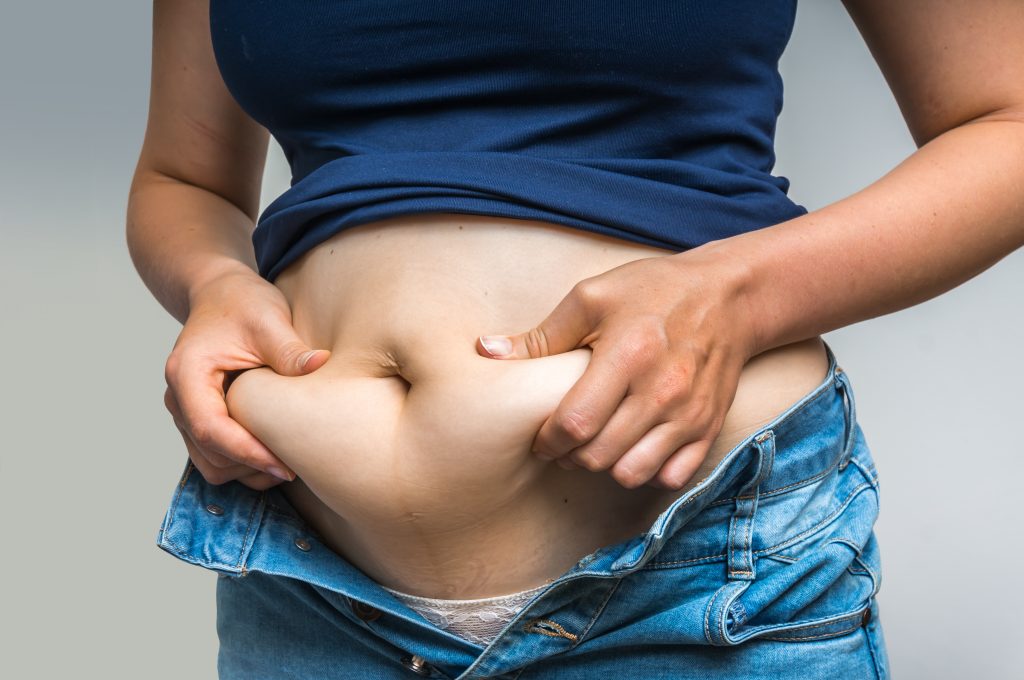
We work with a lot of women who are in perimenopause, and one of the most common complaints we hear over and over is weight gain, particularly belly fat around the middle. Many women are fine in their 20’s and even their 30’s. Once they move into their 40’s, their bodies no longer cooperate, and now they have a muffin top or a spare tire around the middle. Diet and lifestyle have not changed much, but all of a sudden, the weight keeps going up. To make it even more frustrating, what used to work to get rid of the weight no longer works. Going on a “diet” and exercising a bunch used to work when you were 25, but once you hit your 40’s, that approach no longer works. No matter how much you exercise, you can’t get the weight to budge. In fact, you have noticed that you have gained even more weight despite exercising 4 to 5 times per week. We understand how important it is for you to lose the weight and only want to have success in your weight loss efforts. Unfortunately, some of the standard advice you have heard on how to lose belly fat might be making your situation worse. We have put together a list of some helpful tips that might seem contrary to the archaic dogma that we have been “fed” for the last 60 years. In fact, these tips are part of the newest research and will get you headed in the right direction, so you finally start losing the weight you want. What is Perimenopause? When women are in their 20’s and 30’s and hormones are balanced, they continue to cycle every month with no issues. As they progress into their 40’s, the inevitable decline of female hormones typically begins, and symptoms start to show up. Changes to the cycle, mood issues, insomnia, and weight gain, are the some of the most common complaints we see in perimenopause. These symptoms are typically related to lower progesterone levels. We know this because if a woman is still menstruating regularly, that means her estrogen levels are still reasonably sufficient. Weight gain of any kind, but particularly belly fat is an insulin/cortisol problem. Insulin is the only “fat storing” hormone in the body. If elevated, insulin tells the body to store more fat. Also, elevated levels of insulin prevents the body from burning fat. Now add in extra cortisol because you’re stressed on a daily basis. This is like adding kerosene to a fire. It is only going to magnify the “fat storing” message to the body, and you store more fat, especially weight around the middle. Women usually gain weight in the hips and thighs and not in the midsection. The weight gain in the middle is cortisol or stress driven weight gain. The strategy to lose belly fat needs to focus on reducing the insulin burden and balancing cortisol. As a woman enters her 40’s and the female hormones are declining, it makes the body more sensitive or responsive to both insulin and cortisol, which is why the weight gain seems to come out of nowhere. 1. Reduce Your Stress: Reducing stress is, of course, easier said than done. We all have stress in our lives, but this is by far the most important tip on the list because “stress” is causing all the problems. When we say “stress,” we mean cortisol, which is referred to as the “stress hormone.” Cortisol is an important metabolic hormone. We can not live without it. It helps us “survive” on a daily basis. Some acute or short periods of stress is beneficial to the body. It can increase energy, mood, concentration and boost immune function. However, as stress becomes chronic, the body can keep up and begins to regress, and weight gain is often a result. Do your best to try and reduce your stress. Whether that is seeing a therapist, removing toxic people, career change or buying a boat and sailing off into the sunset. I understand it can be challenging to eliminate stress. If you cannot remove stress, try to get better sleep. Read below and check out our post on Tips for Sleep. 2. Get Better Sleep: Insomnia and sleep issues, in general, is one of the most common problems for perimenopausal women. With work, kids, and finances you already have lots on your plate. Not being able to sleep only makes it worse. Stress and sleep go hand in hand. Unfortunately, the more stress we have, the worse we sleep. This is because your cortisol is elevated at night. Elevated levels of cortisol at night will result in trouble falling and staying asleep. If sleep is disrupted, then we can’t get the rest and recuperation we need on a nightly basis to keep going. Over time, not sleeping adds to your stress level and causes continual weight gain. Looking for tips to improve your sleep? Read our article: 11 Tips for Improved Sleep. 3. Don’t Drink Your Calories: Liquid calories of any sort can have a significant glycemic impact, meaning it can raise your blood sugar and insulin excessively. This includes soda, coffee drinks, energy drinks, smoothies, fruit juices, beer, wine, and liquor. This also includes beverages with kind of artificial sweeteners. Even though artificial sweeteners are marketed to have no caloric value, they still cause your insulin to rise, which is precisely what needs to be minimized. 4. Don’t go on a “Diet”: For years, we all have been told to eat less and exercise more as an approach to weight loss. Eating less food translates into consuming fewer calories and exercising more translates into expending more energy. This “energy in / energy out” theory flat out, does not work. It only complicates the system and will not equate to long-term weight loss success. Sure you might lose 6-8 lbs in the beginning by restricting your calories and exercising like crazy. Ultimately you will only gain

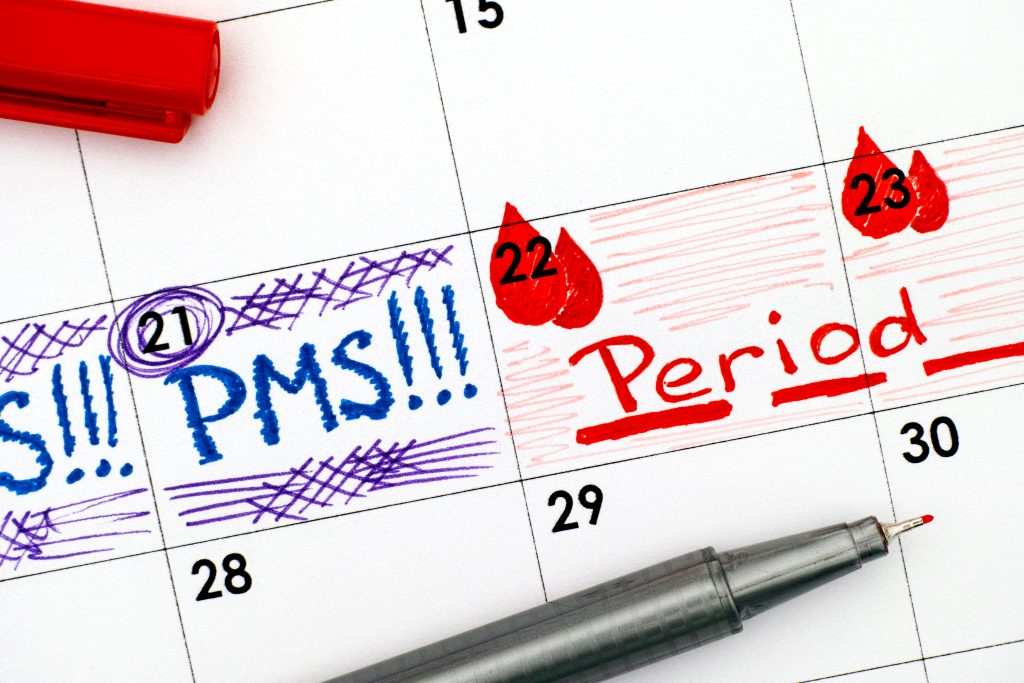
If you are a man or the unicorns that have never experienced Premenstrual syndrome (PMS), stop rolling your eyes. Yes, PMS can be a big deal. It can make women feel uncomfortable (to put it lightly). And it can make the people around the PMSing woman run for the hills. Seriously, I know husbands that escape to go camping or urgently need to work weekends when their wives are PMSing. Even the females experiencing PMS admit they do not want to be around themselves. PMS is not going to kill you (and hopefully not the people around you). It is not a disease, and it is not contagious. If a woman is brave enough to bring up PMS with her doctor, they are going to get blown off. Most doctors do not give PMS much credence. If they remotely try to treat it, all you get is birth control pills, antidepressants, and even a hysterectomy. A perfect example is my patient, “Kara”. Kara came to see me for “hormonal issues”. Her husband, “Kevin”, came in with her because they were not only concerned about her symptoms but also how it was affecting their marriage and family life. This is not unusual to have a couple come to the appointment together. As mentioned above, PMS is not a disease, but it can truly affect relationships and quality of life. Kara said her doctor put her on birth control pills and an antidepressant. Both of which she could not tolerate. Then she was told she could possibly be bipolar and needed to see a psychiatrist. Both Kara and Kevin really thought it was her hormones because the behavior and symptoms were cyclical. During her period, although it was really heavy, she felt great. Then the week after her period, Kara felt pretty good. Starting day 14 of her cycle, she felt poorly and continued to feel worse until she got her next period. Her main symptoms were the mood. Kara said she wasn’t depressed. But she was so mean and they both described it as rage. Kara would get mad at everything. She said everything bothered her. She would fight with Kevin and yell at her kids for being messy. Then cry because she felt guilty at her behavior. She did not have a libido at all during this time. Not that Kevin was interested, because she was so irritable. Her cravings for sugar were intense the two weeks before her period. Every month Kara would gain 3-5 lbs during her PMS-time and then try really hard the first two weeks of her cycle to try to lose it. I told them, there is not a magic pill that is going to make this better. It was going to consist of a multifactorial treatment plan that she is going to have to stick to. Below are some tips that Kara still does to this day to control her PMS symptoms. Symptoms of PMS: (anywhere from 3-14 days before your period) Sugar and carbohydrate cravings (especially refined processed carbs) Weight fluctuations Gain weight easily during PMS and then you have to work really hard to lose it Acne: especially around the chin and jawline There can also be breakouts on the neck, chest and upper back Bloated Constipated Breast swelling and tenderness Anxiety Spotting 4-8 days before a period Cramping painful Cramping can happen during the period or anywhere from 7-14 days before a period IRRITABLE Angry outbursts, patience is nonexistent Crying Sad Trouble staying asleep Low sex drive Feel 100% better when you get your period 7 Tips on How to Cope with PMS: 1. Imbalance between estrogen and progesterone: We all know women get periods. We get periods because our estrogen and progesterone are cycling in a 28-day cycle. Every day is different for our hormone levels. During your period, day 1-4, your estrogen and progesterone are very low. From day 5 to day 11 your estrogen will start to rise, spiking to a high level on day 12. The elevated spike in estrogen on day 12 will signal the egg to be released from the ovary hence, ovulation. When the egg leaves the ovary (ovulation), it leaves behind what is called the corpus luteum. The corpus luteum will start to secrete progesterone. Ovulation usually occurs on day 14 of a 28-day cycle. From day 14 (ovulation) the progesterone will begin to rise. Day21 is the highest level of progesterone in your body. From day 21 the progesterone will start to reduce until day 28 when you have a period. It is during this process of hormonal changes in a 28-day cycle that creates symptoms of PMS. It is the levels of progesterone from day 14 to 28 that can cause PMS. Sometimes the progesterone is not released high enough starting day 14. In this case, a woman will have PMS symptoms beginning on day 14 to her period. This means she has PMS for 14 days of the month. Which let me clarify, she will feel crummy (and everyone around her), for half of the month. Feeling awful for 50% of her life, that is not a way to live a happy, productive life. Others the progesterone plummets from day 21 to day 28, so they will have PMS symptoms the week before their period. Progesterone: Do not take non-bioidentical progesterone, progestins. I know you might be desperate to fix your PMS, but these medications are not healthy. You can raise your progesterone by taking bioidentical progesterone. Micronized bioidentical progesterone is entirely 180 degrees different from progestins. Any doctor that tells you otherwise is a signal that you need to find a new doctor that stays up with the latest research (random google posts do not count). To determine if your PMS is from low progesterone, you need to take a test. There are blood, urine, saliva, etc. testing available for progesterone. Make sure you see a doctor that knows the interpretation of these tests. And
To sum up what estrogen dominance feels like I want to tell you about my patient, Denise. Denise was a 36-year-old mom of 2, married SAHM. She came to see me because she was feeling awful and was tired of trying multiple birth control pills for her symptoms. Especially considering her husband had a vasectomy, they didn’t need a form of birth control. Denise was puffy all the time. She had multiple sizes in her closet and wore lots of skirts because of her daily weight changes. She told me, ‘I have never had a stomach, and now I have a gut!’ Diane had long heavy periods, and she would plan her vacations around her periods. She always felt melancholy and nostalgic, but in an instant get mad over nothing. Denise could not sleep through the night. She would keep a notebook by her bed to write the worried-middle-of-the-night thoughts in. And she often could be found watching TV at 2:30 am. She said her mom had a hysterectomy at her age and her old sister just had a total hysterectomy recently. Her gynecologist tried her on multiple birth control pills. Denise had also tried a hormonal IUD, which made her symptoms worse and she had to have it removed. At his wit’s end, her gynecologist wanted to do a hysterectomy and suggested she see a psychiatrist. She said her doctor never tested her hormones and she felt like they were way off. I had Denise do a blood test for me on day 21 of her cycle. Day 21 is when the progesterone should be the highest in a 28-day menstrual cycle. Denise had high levels of estrogen and non-existent levels of progesterone. Denise had estrogen dominance. Symptoms of Estrogen Dominance: Weight gain/belly fat: I get this question all the time. “Does estrogen dominance cause belly fat?”. Absolutely! Puffy water weight: Weight changes on a daily basis. Moody: Estrogen dominance women are more weepy and nostalgic. They worry a lot about things they cannot control. Denise described it as, “ I am sad and worried all the time.” Easily irritable: While women with estrogen dominance are more sad and worried, they can get cranky for no reason. Then they feel sad and guilty for being so irritated. Breast tenderness: Women with estrogen dominance will have full, tender breasts 7-14 days before their period. Some women cannot even wear a bra at this time. Estrogen causes a lot of water weight. This is why you see weight changes, puffiness, and breast tenderness. Heavy periods: Estrogen loves to ‘grow things.’ If you have estrogen dominance, then the uterine lining will thicken up so much that there is heavy, long periods with a lot of clots. Fibroids, polyps: As mentioned above, estrogen likes to ‘grow things.’ Polyps and fibroids are exacerbated and grow larger in the presence of high levels of estrogen. Fatigue: Estrogen itself does not make you tired. But the symptoms of estrogen dominance can cause fatigue. Such as sugar cravings, sleep issues, low iron from heavy periods, water weight and mood swings. Hungry/Cravings: Estrogen does increase cravings for sugar, salt, and refined carbohydrates. Estrogen dominance can make your appetite increase and increase cravings. Sleep issues: Estrogen dominance can cause trouble staying asleep and waking multiple times in the night. Who does estrogen dominance happen to? Estrogen dominance can happen to women of all ages, but you mainly see it in females 35 to 45 years old. Teenage girls: When a girl first gets her period, she is not producing much progesterone. This creates an imbalance of lower progesterone to higher estrogen ratio. It usually takes 2-5 years for the estrogen and progesterone to balance each other. Perimenopause: During perimenopause, the hormones start to decline. In some females, their estrogen does not decline, but their progesterone drops considerably. This drop in progesterone creates estrogen dominance symptoms. Note: it is not possible to be estrogen dominant when in menopause. Men: Estrogen dominance is not common in men. But you do see it in men receiving testosterone replacement therapy. The testosterone molecule is almost identical structure to estradiol. In testosterone replacement therapy, you can see testosterone converting to high levels of estrogen in some men depending on lifestyle habits and dose and type of testosterone being replaced. It is common to give a man an estrogen-blocker to stop this conversion of testosterone to estrogen in Low-T replacement. Other medications and drugs can cause estrogen dominance in men. What Causes Estrogen Dominance? Processed Food: High glycemic foods will cause estrogen dominance. When your blood sugar goes up, it causes your insulin to soar. I don’t want to bore you here with the biology. So try not to yawn too much here, but higher levels of insulin will raise your estrogen. In nature, animals would get carbohydrates during the summer when food is growing plentiful with long hours of light. This signals reproduction, which is why animals mate in fall. This is why males have more testosterone in the late summer, early fall. Now in our “nature,” we live in a perpetual state of “summer.” Long hours of light (thank you, Thomas Edison!) and lots of high glycemic foods (hello refined carbs!). While in our bodies this doesn’t increase our fertility. But this does make our bellies grow and increase the likelihood of estrogen dominance. Stress and Cortisol: High levels of stress raise our cortisol. The job of cortisol is to mobilize glucose, which in turn makes our insulin rise. High levels of stress can also inhibit ovulation and drop progesterone, Pushing us further toward a state of estrogen dominance. Genetics: Some women are more prone to estrogen dominance. They genetically inherit the ability to make more estrogen. Which is not a ‘bad thing.’ Estrogen is the best hormone in the world. But not properly balanced or letting estrogen lead the show will cause symptoms of estrogen dominance. Adding in high glycemic foods, stress (physical and mental) and a burdened liver can exacerbate
If you google ‘fibroids,’ what you will see this vague description: “Noncancerous growths in the uterus that can develop during a woman’s childbearing years.” Any woman dealing with fibroids knows this description does not remotely describe what it is like to have fibroids. Search online for fibroids, and you will also see loads of information about what the symptoms of fibroids are. But very little about treatment for fibroids. And very little information about what causes fibroids to form. Any woman that has fibroids knows it can be incredibly frustrating to deal with. Unfortunately, many doctors and clinicians do not focus on fibroids. Why? Because fibroids are common in many females. Half of all women that have reached the menopausal age (51 years) have fibroids. The symptoms can range from mild to severe and are not life-threatening. Many women leave their Gynecologists office disappointed because they did not receive help with their fibroid symptoms. Again, there are few treatments for fibroids. Those being hormone therapy or surgery. What Causes Uterine Fibroids? Genetics: It is common to see fibroids run in families. Hormonal Imbalance: While there is no exact cause of fibroids. We do know that it is driven by hormones. You see fibroids in women that are menstruating and making their own hormones from their ovaries. And you see the fibroids shrink when a woman goes through menopause. You also see fibroids grow back in postmenopausal women taking high doses of hormone replacement therapy. As mentioned, fibroids are related to hormones. Particularly estrogen. Now estrogen is a beautiful hormone and has lots of wonderful functions. But one function that is not particularly useful is, estrogen likes to “grow things.” Estrogen grows breast tissue. Excess estrogen can cause weight gain. But in this case, estrogen will grow fibroids. As I said, estrogen is a beautiful hormone. Estrogen is great for bone density, heart, brain, mood, skin, hair, sex drive, the list could go on and on. If estrogen is not “balanced”, it can run rogue. Unbalanced estrogen growing fibroids can mean too much estrogen or not enough progesterone. Low progesterone: Progesterone insufficiency is when a woman is making less progesterone compared to her estrogen. Her estrogen levels could be perfect. But if she is not producing enough progesterone that can exacerbate fibroid symptoms or grow them. High estrogen/Estrogen dominance: If a woman is producing high levels of estrogen that will grow or create fibroids. There is not a lot of conventional testing to find out if a woman has estrogen dominance or progesterone insufficiency. In my practice to find out if a woman has estrogen dominance or progesterone insufficiency I have them take a blood test. I have them get their blood drawn on day 18-23 (ideally day 21) of their cycle testing for estradiol and progesterone levels. Obesity (Insulin Resistance): Did you know that our adipose (fat) tissue is an endocrine gland? Yes, fat cells make hormones. There are three forms of estrogen our bodies produce. Those are estrone, estradiol, and estriol. These estrogens are mainly made from our ovaries. But in the case of fibroids, fat tissue makes estrone. If we have a lot of fat cells, then those cells will produce higher levels of estrone. These increased levels of estrone can contribute to growing fibroids. Inflammatory foods: Eating inflammatory foods will actually grow fibroids or exacerbate the symptoms. What are inflammatory foods? The most inflammatory food is SUGAR or anything that converts to sugar can lead to inflammation. Below is a quick list of inflammatory foods: Refined grains and processed carbohydrates (bread, pasta, cookies, bagels, cereals etc) Alcohol Artificial sweetener Dairy Conventionally fed and processed meats Stress: Stress to some extent can also be a problem for fibroids. Stress causes our cortisol to rise. When cortisol is elevated, that mobilizes glucose from our liver and large muscles. That rise in glucose causes insulin to rise. Higher levels of cortisol, insulin, and glucose can be very inflammatory and lead to weight gain. This is another recipe to grow or increase the symptoms of fibroids. Hormone Replacement in Menopausal Women: The standard descriptions on google say that uterine fibroids occur in women of childbearing age. Yes, it is true that menstruating women can get fibroids. That is because of the relation to hormones. Menopausal women that are getting hormone replacement can also grow fibroids. I had one patient, Barb that came to me for hormone replacement. Barb had been on hormone replacement from another doctor, but she kept bleeding. It is alarming when a postmenopausal woman is bleeding. So her doctor took her off everything and discharged her as a patient. Bioidentical hormone replacement (BHRT) can be beneficial for menopausal symptoms, anti-aging, bone density and so much more. What is of key importance here, is the dose. If there is too much estrogen given for the progesterone dose, that creates estrogen dominance. That imbalance of high estrogen to low progesterone can grow a fibroid or cause the lining of the uterus to thicken. Thereby, bleeding from the uterus. Barb was on an estradiol patch, and a progesterone capsule Estradiol is the strongest form of estrogen. An estradiol patch can be quite strong itself. The dose she was on causing thickening of her uterine lining and causes a pre-existing dormant fibroid to grow. Even after all the bleeding, symptoms and a biopsy to make sure she did not have uterine cancer, Barb still wanted BHRT. All we needed to do for Barb was a dose adjustment to reduce the estrogen and increase the progesterone. What are Uterine Fibroids? Fibroids are benign non-cancerous growths in the uterus. They are technically considered a non-cancerous tumor. Which scares the heck out of us to hear, “I have a tumor in my uterus?” Repeat, fibroids are not cancer. But they are growths that can occur in the uterus. Types of fibroids: Subserosal: This is the most common type of fibroid is inside the uterus. Subserosal fibroids are attached to the surface lining of the uterus. Submucosal: This type of fibroid is found in the lining of