Hormones are chemicals that are made by your endocrine glands. The glands release hormones into your bloodstream to be carried to the appropriate body part.
It’s difficult for you to function properly when your hormones are out of balance. A hormone imbalance can cause weight gain or mood swings that affect your day-to-day life. Taking hormones can help people whose bodies don’t make enough of a certain hormone, or whose hormone levels are unbalanced.
Bioidentical hormones are just one type of man-made hormones available. Of all the hormones out there, the bioidentical type is the closest to the real thing. These hormones are chemically identical to the ones your body makes, so you can absorb them easily. Bioidentical hormones are made in a laboratory and can come in different forms.
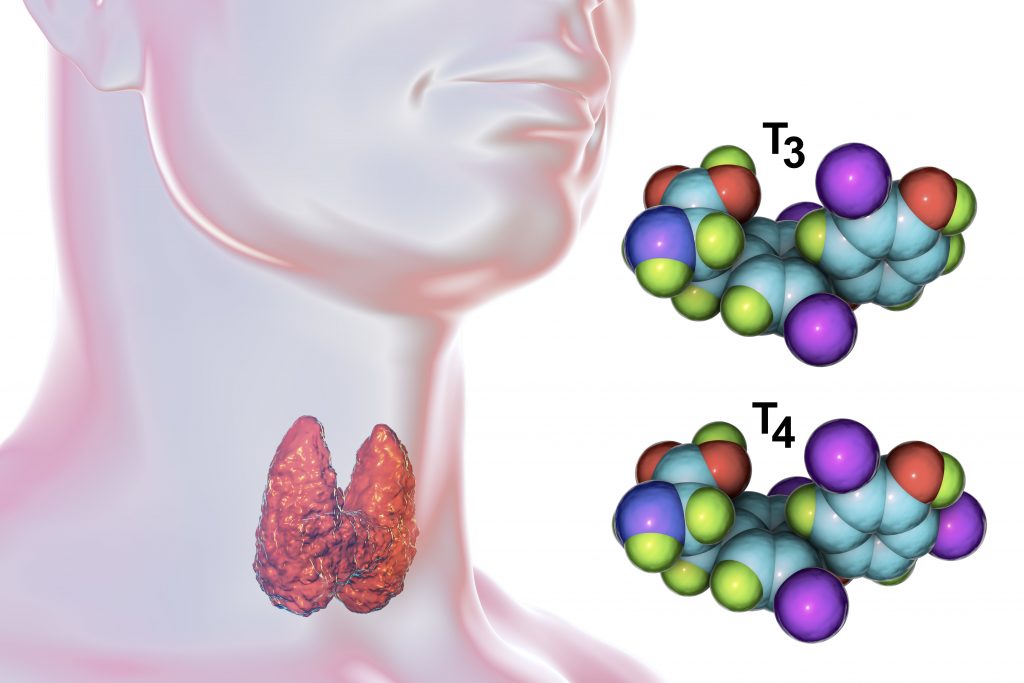
The product Spectra 303-T, by Integrative Therapeutics, has been discontinued. The Spectra 303-T has been an amazing thyroid supplement for many years. I know that many of you are worried and wondering what to take in replacement. Not to stress, I promise to provide you with an equivalent or a better recommendation by the end of this article. But first I have to say, the disclaimer… this is not meant to be medical advice… educational purposes only… Let’s start with: Why was Spectra 303-T so awesome? Thyroid glandular: Well, first and foremost, the thyroid glandular in the Spectra 303-T is an excellent way of supporting the thyroid. You might have a subclinical low functioning thyroid and need a little thyroid support. Taking a thyroid glandular is a great way to help your thyroid function. I am sure you realize, thyroid glandular is animal-based. So you have to be careful about where the animal product is sourced. I never worry about any ingredient in a product made by Integrative Therapeutics. Integrative Therapeutics has an excellent reputation for high quality and high standard ingredients. When taking the Spectra 303-T, you never have to worry about taking a shady or unscrupulous form of animal glandular. A short summary of why these Spectra 303-T ingredients are needed for thyroid: Iodine: Iodine is critical for the production of thyroid hormone production. Both thyroxine and triiodothyronine (T4 and T3) need iodine for its molecular structure. Zinc: Zinc Helps with T4 converting to free T3 and the synthesis of thyroid hormones. Low levels can contribute to low thyroid function. Copper: Copper: Balances zinc and low levels can contribute to low thyroid function. Tyrosine: Tyrosine: Precursor to thyroid hormones, thyroxine, and triiodothyronine (T4 and T3). It is needed along with iodine to make thyroid hormone. Let’s talk about actual thyroid hormone, thyroid function, and blood lab testing: The thyroid gland makes mainly T4, which is a stable molecule with a long half-life (up to 7days) and will travel in your bloodstream. Mainly your liver and some peripheral tissues will convert your T4 to T3. T3 is an unstable molecule with a short half-life (24hours). But Free T3 is the active form of thyroid. When I say FreeT3, “free” hormones are not bound and bioavailable. You want to take thyroid support that is going to maximize your conversion of T4 to FreeT3. Often T4 will convert to Reverse T3 instead of FreeT3. Reverse T3 (RT3) is an inert molecule that has no activity in your body. In fact, RT3 (reverse T3) can block the T3 receptors. So the Free T3 that you do have cannot even access its receptor. Ideally, (disclaimer…disclaimer…) you want your Free T3 to be at least at 3.0 and your RT3 (reverse T3) under 25. The way the system works is the TSH (thyroid-stimulating hormone) is secreted by your brain, the pituitary. The TSH monitors the overall thyroid levels in your blood and works in a “negative feedback loop.” If you have a high TSH, then your thyroid function is low. And if you have a low TSH, then you are hyperthyroid. The normal blood lab reference for TSH is .45 to 4.5, which is a vast reference range. Many people experiencing hypothyroid symptoms will fall into this range. It is a common scenario that you go to your doctor complaining of hypothyroid symptoms. Only to be turned away, saying you’re thyroid is fine. Disclaimer….disclaimer… Any TSH between 2.5 and 4.5, I always consider the possibility of hypothyroid or subclinical hypothyroidism. This is where the thyroid support supplements can really make a difference in someone’s hypothyroid symptoms. Sum it up DrD! If you are going to take a thyroid supplement. You want one that is going to maximize your conversion of T4 to FreeT3. You want your TSH below 2.5. And you want your FreeT3 to be at least at 3.0 and your reverse T3 below 25. If the thyroid supplement has a glandular in it. You want to make sure that it is from a reputable source and not full of heavy metals or toxins or anything you are not aware of. I cannot take Spectra 303-T, so what do I take? As soon as the Spectra 303-T was discontinued, my amazing, could not live without assistant, Erika jumped on the phone with Integrative Therapeutics. After speaking with the representative we know that there is not a problem with the product. As a company, the rep said they are refocusing and centralizing their products to be focused on neuro-endocrine, gastrointestinal and metabolic formulations. But they do have a replacement. Is there an alternative to Spectra 303-T? The replacement product for Spectra 303-T is BMR Complex. There are a few differences between the two. After reviewing it, I feel that the BMR complex is a perfect substitute for the Spectra 303-T. The BMR costs little more money than the Spectra 303-T, but with time, it is understandable that pricing needs to increase. Research and finding healthy reputable sourcing is not without cost. While there is a cost increase, it is not that much difference between the BMR Complex versus the Spectra 303-T. What is the difference between the BMR Complex and Spectra 303-T? Let’s break this down: Spectra 303-T: One tablet equals: Iodine: 225mcg Zinc gluconate: 10mg Copper gluconate: 500mcg L-tyrosine: 100mg Thyroid glandular: 100mg: (Bovine source) BMR Complex: ONE capsule (not the two as the serving dose says on the bottle) Iodine: 150mcg Zinc gluconate: 7.5mg Copper gluconate: 0.5mg which equals 500mcg L-tyrosine: 150mg Thyroid glandular: 150mg Now if you look at the label on BMR Complex: it says two capsules equals double of what I just showed. But I wanted to break it down to what one tablet equals so you can compare it to the Spectra 303-T. If you are still reading (thank you very much for hanging in there with me), as you can see from comparing the Spectra 303-T to the BRM. They are quite similar. I would recommend
One of our most popular podcasts, ‘Do you have low T3’ received a lot of listener questions. In this article, I would like to answer some listener questions regarding their concerns about low T3 levels. Just a little background, I promise not to bore you with too much physiology. The thyroid gland mainly produces T4 hormone. T4 is a very stable molecule with a long half-life, close to 7 days. T4 does not have a lot of activity in the body, but it will travel in the body and converts to T3. Triiodothyronine (T3) is the active form of thyroid hormone. Mainly the liver and to a lesser extent the colon and peripheral tissues will convert T4 to T3. Many people complain of low thyroid symptoms but their “thyroid labs” are normal. In this case, it could be a low T3 level that is causing their low thyroid symptoms. In this article, I want to answer some listener questions about T3 levels and thyroid that I think will apply to many of you reading this. Question from Raphy: What does it mean when T3 is low and everything else normal? Dear Raphy, Thank you for your question. As I have mentioned above the T4 will convert to T3. 60% of the conversion occurs in the liver with 20% in the colon and 20% in the peripheral tissues. There are a few reasons that the T4 may not be converting to T3 creating a low T3 level. 1. One of the most common reasons for decreased conversion is dietary. Reducing calories, going long hours without eating in the day will create low levels of T3. When there is a lack of food, the body senses it is in a starving state. To try and preserve body mass and reduce the metabolism, you will see a drop in the free T3 levels. This is one of the reasons that when a person goes on a caloric restriction diet there eventually is a plateau in weight loss if not rebound weight gain. 2. Another reason for low T3 levels can occur from estrogen therapy. Any type of estrogen hormone therapy can drop T3 levels slightly. When we treat a woman with bioidentical hormone replacement, we always test their free T3 levels several weeks later to make sure the estrogen did not drop their free T3 levels. 3. Taking T4 monotherapy can reduce the conversion of T4 to T3. The medication Synthroid or levothyroxine is used for low thyroid/hypothyroidism and is a form of T4 only. You will see when taking a T4 only therapy for hypothyroidism can often show lower T3 levels. As mentioned above T4 is supposed to convert to T3. When given T4 monotherapy you will often see the T4 will either pool and not convert to Free T3. Or the T4 will convert to reverse T3 (RT3) instead of free T3. Usually, it is a good idea to test a person on T4 monotherapy for their RT3 as well as free T3 levels. 4. As mentioned the liver is the primary source of conversion (T4 to T3). If a person has a sluggish liver, inflamed liver, elevated liver enzymes or a fatty liver can reduce the free T3 levels. Taking supplements that are for liver health can help the conversion of T4 to T3. Also, lifestyle changes that put an extra burden on the liver can help the T3 levels. Reducing alcohol, caffeine sources, sugar, high fructose corn syrup, medication can all have an effect on liver health. Also, the microbiome in the colon helps conversion of T4 to T3. Not as much as the liver (60%) but the microbiome represents 20% of the conversion. Make sure there is no constipation or diarrhea can help the conversion. Working on improving the gut microbiome can also help the conversion. Such as taking a probiotic and dietary enriched with fibrous foods. Question from Ben: Since this article mentions heavy periods is it referring just to women with low TSH and T3? I want to know more about Male TSH T3 and T4. Thanks. Dear Ben, Thank you for reaching out. We certainly do not want to forget about the fellows. Men also can have thyroid issues and low free t3 levels. While low levels of free T3 can create female hormonal imbalances, this too happens in men. Hypothyroidism in men can cause lower levels of testosterone. Hypothyroidism can cause a lower sensitivity to LH luteinizing hormone. Luteinizing hormone (LH) is secreted from the brain, specifically the pituitary. LH will stimulate testosterone production in the testes. If there is a reduced sensitivity to LH, then testosterone level in men will be reduced. Many men have hypothyroidism, subclinical hypothyroid and Hashimoto’s disease. Often it can be missed in men because there may be a different set of symptoms seen. In men, you do not see as much weight gain in hypothyroid as in women. Also, men with hypothyroid do not have constipation and slow digestive transit time that the women do. Women will typically have female hormone imbalances, increases the risk of miscarriage and menstrual irregularities. Of course, you would not see this in men. Men usually do not have sleep issues that hypothyroid women have. Men usually sleep well but are fatigued during the day. While women will have trouble staying asleep and daytime fatigue. Men with low thyroid levels will have hair loss. But it is often missed because it is more common for benign hair loss in men. Question from Jean: I have low free t3, low free t4 and extremely low TSH, liver function is also poor, and I wonder if the 2 are related? Dear Jean, I mentioned above in Raphy’s question, the liver is responsible for 60% of the T4 to T3 conversion. If you have poor liver function, then yes you could have low T3 levels. Poor liver function can come from many things. Overconsumption of alcohol, medications and certainly high fructose corn syrup can put a
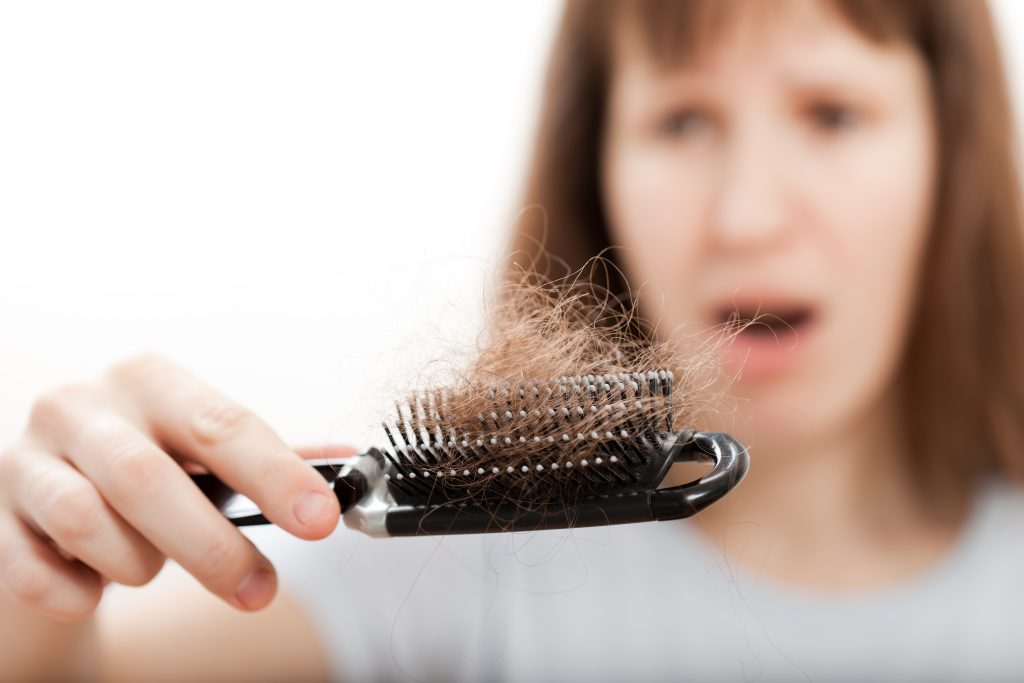
A low functioning thyroid can cause many symptoms. That is because the thyroid is involved in practically every aspect of your body. In this post, I am going to talk about ways to help hair loss from thyroid and other hormonal imbalances. Hair loss from hypothyroid is from the root. You will find full-length pieces of hair everywhere. In hypothyroid you will find hair thinning all over but particularly the top and hairline. Also, the eyebrows really take a beating in hypothyroid. There will be patches of hair missing throughout the eyebrows and the tail ends will disappear. Even body hair will reduce in hypothyroid. I had a patient that hadn’t shaved in years. And once we treated her hypothyroidism, she had to start shaving her legs again. Other Common Symptoms of Hypothyroid: Fatigue Weight gain Dry skin and terrible nails Irregular periods / bad PMS Mood issues: Thyroid slows everything down, even your mood. Many people report once their thyroid is treated their mood improves. Blood work out of range: Hypothyroid can disrupt blood sugar, raise cholesterol and increase inflammatory markers. While having concerns over hair loss might seem superficial, it is not. It is disturbing to be losing hair and worrying if it will ever stop. I’ve had patients who: Cry in my office because they don’t know how to stop the hair loss. Bring in hair that was lost in a little baggie or tissue. Send me pictures of the hair they are losing. Spend extraordinary amounts of money on special shampoos, conditioners, products for thinning hair. Spend money on low-level laser hats and steroid scalp injections Get their temples tattooed, so the hair loss is not so noticeable get blown off by their primary care or general provider because of their hair loss concerns. It is important to understand hair loss is not a “disease,” it is not going to kill you. Unfortunately, many doctors are not interested in your hair loss concerns. Because they are jaded by dealing with people that have illnesses like diabetes, cancer, heart disease. I have had patients tell me that their primary care doctors tell them there is nothing that can be done. One patient told me, her doctor told her to buy a wig. They are told hair loss is a consequence of thyroid, hormones, getting old and to just deal with it. But this is a very distressing concern, especially for women. For men, it is more socially acceptable to have thinning hair or baldness compared to women. With that said, I would like to provide you with some ideas to help with hair loss from hypothyroid and other hormonal imbalances. Thyroid medication: If your thyroid is underactive, taking thyroid medication will help improve the overall function. If you are having symptoms of hypothyroid and excessive hair loss, have a blood test to check your thyroid. If you are interested in the different types of thyroid medication click on the link to listen to our podcast Episode 021. Thyroid Testing: If you are interested in thyroid testing, click on the link to our podcast Episode 019 that is all about thyroid labs. Raise T3: Bear with me as I try not to bore you with the physiology of thyroid hormones. This is going to be short and sweet and will not include every detail of how the thyroid functions. The brain releases TSH (thyroid stimulating hormone). The TSH monitors overall thyroid hormones. The thyroid releases mainly T4 (thyroxine). Thyroxine (T4) converts to T3 (triiodothyronine). T4 has a long half-life and doesn’t have much activity other than converting to T3, which is the active form of thyroid. You can have all the T4 in your body, but if you do not have T3, then you will have symptoms of hypothyroid. The goal here is to raise your T3 or raise the conversion of T4 to T3. The TSH is not an accurate measure of thyroid function. To accurately measure thyroid, you want to include a Free T4 and a Free T3. Ways to Raise T3: Reduce exercise: Excessive cardiovascular exercise will decrease your conversion of T4 to T3. If you over exercise or do a high volume of intense cardiovascular exercise, you are putting a heavy burden on your thyroid and adrenal glands. Intense cardio will dramatically increase your cortisol levels which impact your T3 levels. Liver function: Your liver is the main converter of T4 to T3. If your liver is burdened or not functioning well, it cannot convert T4 to T3. Thereby reducing your T3 levels in your bloodstream. A burdened liver can come from: Excessive caffeine intake Too much alcohol High intake of sugar especially fructose (high fructose corn syrup) Certain medications like statins (cholesterol-lowering medication) Taking a lot of medications Taking a lot of Tylenol or medicines with acetaminophen Fatty-liver disease (NAFLD) Improve liver function by: Avoiding too much alcohol, sugar, fructose and restricting medications, especially meds with acetaminophen. Reduce coffee/caffeine consumption Take a liver supplement with herbs and vitamins to improve liver function Regular bowel movements, reduce constipation No starvation/caloric restriction (dieting): Restricting your calories dramatically reduces your T3 levels. Part of your T3’s function is to keep your metabolism moving at a healthy pace. If your body thinks it is starving, it will do anything to try and preserve body mass. Automatically your T3 levels drop to reduce metabolism. I remember a young teen patient that was referred to me by a colleague to address her thyroid levels. She came in with her mom and grandmother as they were concerned about her hypothyroid symptoms. She was always tired and it was starting to affect her grades, family and social life. Her TSH was in range and even looked like she was HYPER-thyroid. Her T4 levels were normal. But she has very low levels of T3. I had seen her a couple years before and noticed that she had lost a considerable amount of weight. In fact, she was incredibly thin.
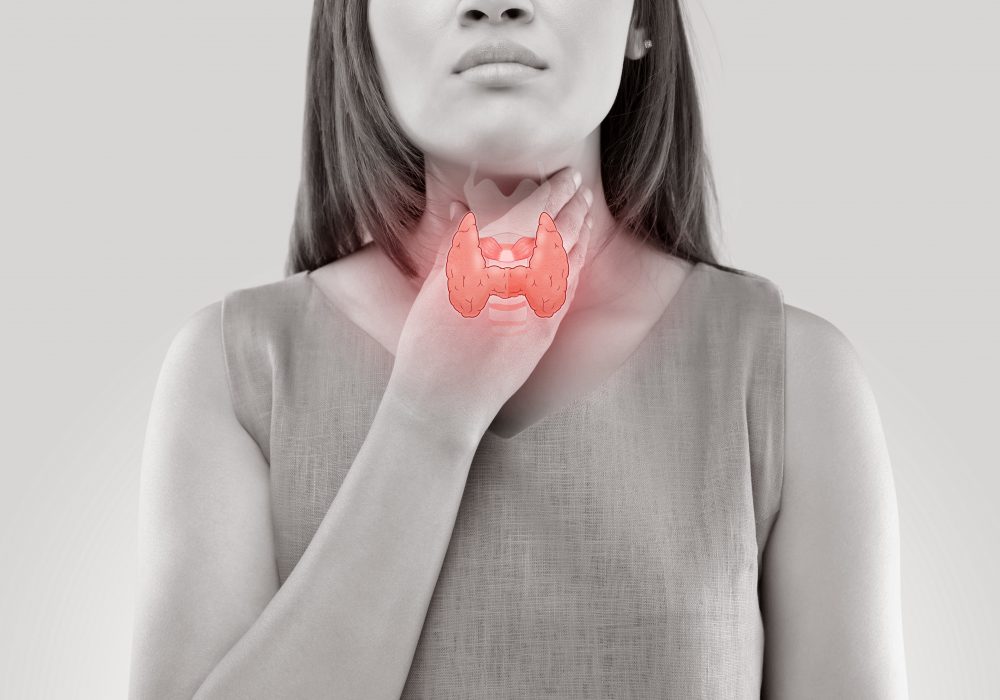
Share Share on Facebook Tweet Tweet this Pin Pin this Share Share on LinkedIn There are a couple of ways to answer this question, but first, let’s run through an all too common scenario. You are tired all the time, you have gained 30 lbs, your hair is falling out, and have struggled with constipation for years. Of course, you Googled your symptoms and are pretty sure that you have a thyroid problem. You decide to make an appointment with your doctor to get a blood test to find out once and for all if you have hypothyroidism. Below is a list some of the common and not so common hypothyroid related symptoms. Common Hypothyroid Symptoms: Low energy / Fatigue / Drowsiness Weight gain Constipation PMS / Heavy periods Infertility Low mood / depressed Anxiety Enlarged thyroid (Goiter) Puffy eyes/face Swollen hands and feet Dry skin Brittle nails Hair loss Loss of eyebrow hair (lateral ⅓ = Queen Anne’s Sign) Cold feeling Going into the appointment, you feel optimistic that you might get some answers as to how you have been feeling and excited to feel better. You tell your doctor the situation, and he draws some blood to run a few tests. About a week later, you get a call from his office saying you that your tests were “normal” and your thyroid is fine. You are disappointed. How can you feel this lousy and your thyroid tests be normal? You feel lost, a bit hopeless and not sure what to do next. This is an all too common situation that many of our patients have gone through. So, do you have hypothyroidism? You seem to have all of the classic symptoms of hypothyroidism, but your doctor says your fine. From a conventional perspective, If your Thyroid Stimulating Hormone Level (TSH) is above the reference range, then your doctor will diagnose you with Hypothyroidism. If your TSH is within the reference range, your doctor will not diagnose you with Hypothyroidism. This seems very simple and straightforward; however, we have had many patients over the years go to their doctor, suspecting they have a thyroid issue only to be told they don’t. You might have had a similar experience. How can so many people, especially women be wrong about how they feel and the symptoms they have on a daily basis. Why is a hypothyroidism diagnosis contingent only on a single TSH level? Why are a patient’s symptoms routinely ignored during the evaluation process? TSH Test: The Thyroid Stimulating Hormone test is a screening assessment of the hormonal communication between the brain and the thyroid gland. The anterior pituitary gland in the brain releases TSH, which then enters the bloodstream and ends at the thyroid gland. The TSH hormones then “stimulates” the thyroid gland to produce T4 (Thyroxine). Once an adequate amount of T4 is in the bloodstream, it signals the pituitary to stop producing TSH. In physiology, this is referred to as a Negative Feedback Loop. Many factors influence the thyroid feedback loop. Genetics, nutrition, sleep quality, stress, and environmental toxins are some of the factors that affect thyroid function. If your thyroid is low or underactive, the TSH tends to be high normal, which we consider anything higher then 2.0 ng/dL to 2.5 ng/dL. If the TSH is greater than 4.5 ng/dL, this is diagnostic for Hypothyroidism. TSH Reference Range: 0.45 ng/dL to 4.5 ng/dL The TSH test is often the only “screening” test that will be done to assess thyroid function. Conventionally, it is black and white, either you are Hypothyroid, or you are not. If your TSH test is greater than 4.5 ng/dL, then you are hypothyroid and if it below 4.5 ng/dL you are not considered to be hypothyroid regardless of your symptom picture. Obviously, this begs the question, is a TSH test really that reliable to be the only criteria to diagnose someone with Hypothyroidism? We feel the TSH should not be the only test used to diagnose a patient accurately. Many people have a TSH level below 4.5 ng/dL that could easily be considered to have hypothyroidism based on symptoms alone. We think the TSH only approach is severely inadequate to assess and diagnose someone with Hypothyroidism. Thyroid issues are much more complicated and should not be reduced down to a single test. Some Endocrinology Associations have proposed that the TSH reference range should be reduced from 4.5 ng/dL down to 2.5 ng/dL. This certainly narrows the reference range so that fewer people would go undiagnosed. Even still, this puts too much of an emphasis on just the TSH level alone. The tests we routinely run for our patients are listed below. We never just run a TSH alone, but we do include it in our panel as it does help to make decisions about medication dosage adjustments. We prefer to run a Free T3 and Free T4, as opposed to Total T3 and Total T3. We find that most everyone typically falls within the reference range as well. In our opinion, a Free T3 level is the most clinically relevant test. We also include both the Anti-TPO and Antithyroglobulin antibody tests as well because we want to know if the patient has Hashimoto’s Thyroiditis or not. Ideal Hypothyroidism Testing: TSH Free T3 Free T4 Anti-TPO Anti-Thyroglobulin Reverse T3 (if currently on medication) If you are interested in getting testing done, you can purchase labs directly from our online store. Use the discount code: THYROID to get 25% off your order. It is estimated that about 70% of all hypothyroid cases are of the Hashimoto’s type. Plus, it helps formulate a comprehensive treatment plan, beyond just medication. We consider many other factors. Factors that Influence Thyroid Function: Genetics Diet (sugar / gluten) Stress Sleep (lack of) Liver function (caffeine & alcohol) Environmental toxins Is Subclinical Hypothyroidism Treated? One rule we have always stuck by is to treat the patient, not a blood test. Unfortunately, there is

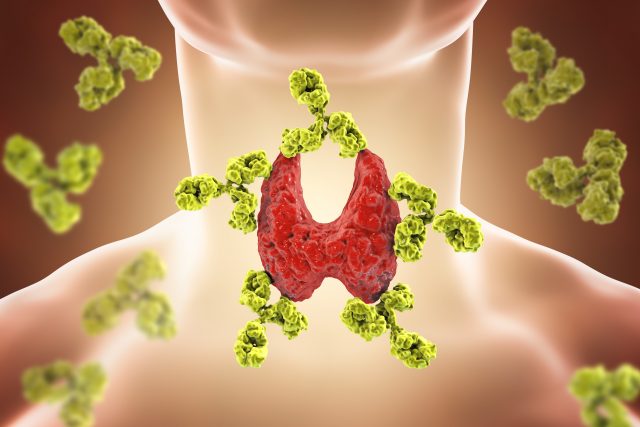
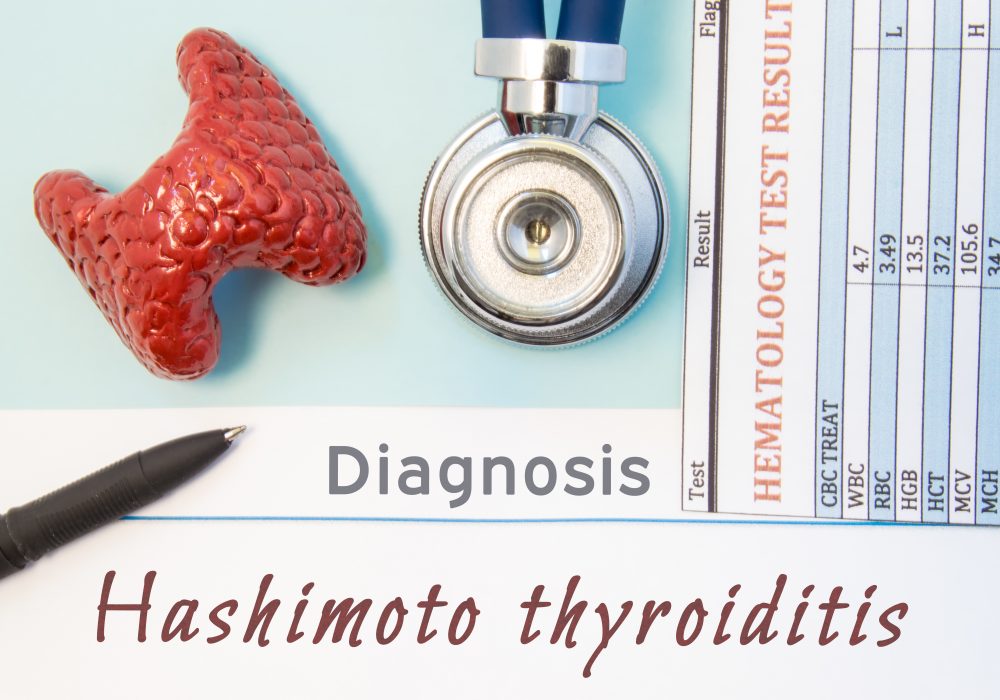
Hashimoto’s Thyroiditis has been around for a long time, but not entirely recognized until recently. Archaic dogma assumes if you have hypothyroid you have Hashimoto’s disease. And the treatment is singular, Synthroid/levothyroxine; however, Hashimoto’s is so much more than hypothyroid. Hashimoto’s disease is an autoimmune disorder in which the immune system attacks the thyroid, which results in hypothyroid and a multitude of autoimmune symptoms throughout the entire body. Recently brave celebrities are coming forward talking about their battle with Hashimoto’s. The public is creating forums to discuss their Hashimoto’s. People are writing blogs and books about their Hashimoto’s disease. Finally, functional medicine and progressive doctors are treating Hashimoto’s as an entity itself. I cannot tell you how many times I have had a new patient see me for Hashimoto’s disease, and they cannot answer how they got diagnosed. Or ask me, “how do I get tested for Hashimoto’s disease?”. The proper tests for a Hashimoto’s diagnosis is a blood test for antibodies. The antibodies tested to diagnose Hashimoto’s disease are: Thyroid Peroxidase Antibodies (TPO) Thyroglobulin Antibodies (TGab) Thyroid Peroxidase Antibodies (TPO): The TPO is the most common antibody to be seen elevated in Hashimoto’s. About 75% of Hashimoto’s patients have elevated levels of TPO. The standard reference for TPO is anything less than 9iu/mL. Thyroglobulin Antibodies (TGab): About 5-10% of people diagnosed with Hashimoto’s disease have only TGab elevated. The reference for TGab is less than or equal to 1 IU/mL. Because having just your thyroglobulin antibodies elevated is not as common, many people with Hashimoto’s are missed. I have had many patients who have been told they do not have Hashimoto’s, but they have so many symptoms related to it. Eventually, we find out their thyroglobulin antibodies were never tested. For example, “Michele” came to see me because she was at her wit’s end. She had been to her internist and multiple endocrinologists. Michele was taking Synthroid prescribed for her by an endocrinologist. But she kept feeling worse and worse and was upset because she wasn’t getting any answers. The latest endocrinologist told her that she didn’t have Hashimoto’s Disease and was not even hypothyroid. He kept lowering her Synthroid because her TSH was in normal range. And he wanted to take her off her thyroid medication for eight weeks and retest her thyroid. Michele already felt so bad she was afraid to stop the thyroid medication. Her family was confused and frustrated with her. Her husband thought she must be going through hormone problems or early menopause at 43 years old. And her internist, while doing his best to help her, finally said that maybe she should see a psychiatrist. I have had many patients tell me they have been told their symptoms are in their head and recommended to see a therapist, psychologists, and psychiatrist. I do believe in the power of therapy, and everyone can use a good therapist. But it is very frustrating and disempowering to be told your physical symptoms are psychosomatic. Michele was experiencing a lot of joint pain and fatigue. Her hair was half the amount it used to be. She has no libido, menstrual problems, heart palpitations, migraines, digestive and short-term memory issues. I ran a blood test for her thyroglobulin antibodies, and they were elevated at >900. Because thyroglobulin antibodies are not as common in Hashimoto’s, Michele’s diagnosis was missed. It did take time to work on reducing Michele’s antibodies and Hashimoto’s symptoms. But it gave her a sense of strength and hope to know, that her symptomatology was not “all in her head.” Quick side note: Do not confuse the thyroglobulin antibodies with total thyroglobulin levels. For Hashimoto’s disease, you want the thyroglobulin antibodies. The total thyroglobulin levels are for testing patients that have had their thyroid gland removed due to cancer. Total thyroglobulin levels are used to see if part or any of the thyroid gland is growing back after thyroid removal from cancer. I consider there are three types of Hashimoto’s disease. TPO-only: These are the people that have only the thyroid peroxidase antibodies elevated: about 75% of Hashimoto’s patients. TGab-only: The people that have only the thyroglobulin antibodies elevated: about 5-10% of Hashimoto’s patients. Mixed TPO/TGab: The people that have BOTH thyroid peroxidase antibodies and thyroglobulin antibodies elevated: about 15% of Hashimoto’s patients. From working with Hashimoto’s patients for over a decade, patients with the mixed (both TPO and TGab) seem to have more symptomatology than those with TPO or TGab only. Hashimoto’s disease is an autoimmune disease where the immune system is attacking healthy thyroid tissue. I feel if you have both TPO and TGab it’s like having “two-armies” attacking your thyroid instead of one. What does the Hashimoto’s antibody level mean? The goal with Hashimoto’s antibodies is to try to get the levels to reduce as much as you can. I have had some patients with antibodies so high, and the blood test cannot get an accurate value. I have seen TPO antibodies >2000 and TGab >900. The lower the antibodies, the lower the autoimmune reaction against the body. I do find a correlation between symptoms of Hashimoto’s and the level of antibodies in the bloodstream. “Michele” from above, her thyroglobulin antibodies were so high (>900), that the blood test could not get an accurate value. We got right to work utilizing a multifactorial plan implementing medication, supplementation, dietary and lifestyle management. After three months her TGab was still >900, but Michele only felt slightly better. Another three months later her TGab was 755, she felt much better, and we were on our way. Another example, “Debe” came to see me for her Hashimoto’s hypothyroid symptoms. I asked her, “Do you know which antibodies you have and what their levels are?”. Debe did not, but that is understandable as most people don’t. I think it is important to educate patients about what Hashimoto’s is and what the antibodies are. And we are not only going to work
Hashimoto’s Disease also known as Hashimoto’s Thyroiditis is an autoimmune disorder in which the immune system attacks the thyroid gland, eventually leading to hypothyroidism. Hashimoto’s does run in families as a genetic trait and seems to be more predominant in females. Proper Hashimotos testing is important for a diagnosis and will help in determining effecitve treatment options. Blood tests to diagnos Hashimoto’s Disease: TPO: Thyroid peroxidase antibody TGab: Thyroglobulin antibody TSH: thyroid stimulating hormone Free T4 Free T3 Reverse T3 Iron TIBC: Total iron binding capacity Ferritin Thyroid Peroxidase Antibody (TPO) and Thyroglobulin Antibody (TGab) The TPO and TGab are antibodies present in Hashimoto’ s. In about 70-80% of people with Hashimoto’s, the TPO antibodies are present. In about 15-20% of patients with Hashimoto’s disease the TG antibodies only are present. The presence of TPO and TG antibodies together is much less common at about 5%. It is important to not only to test for TPO but also the TGab because a portion of the population with Hashimoto’s could be missed. Also the higher the level of circulating antibodies can contribute to more symptoms in Hashimoto’s, meaning that monitoring the antibody levels is helpful for treatment. Reference Ranges: TPO < 9 iu/mL TGab < 1 iu/mL Thyroid Stimulating Hormone (TSH) The TSH is a signal from the brain to the thyroid in order to get the thyroid to produce or not produce thyroid hormone. If the thyroid gland is under producing thyroid hormone then the TSH increases. If the thyroid gland is overproducing then the TSH decreases. Reference Range: TSH .45-4.5 uIU/mL The reference range for TSH is misleading as many people can fall into range and have hypothyroid. If a person’s TSH is 2.0uIU/mL or higher, it is important to further investigate as this indicates hypothyroid, Hashimoto’s or decreased thyroid function. Free T4 (FT4) Free T4 is mainly made from the thyroid gland and it is a very stable molecule. It has a long half life, close to 7days and really has very little activity. Free T4 is needed to convert to Free T3, which is the most active of the thyroid hormones. Reference Range: Free T4 .8-1.8 ng/dL Free T3 (FT3) Free T3 is the active form of thyroid hormone, so it is important to make sure it is in the proper range. A person with a good level of T4 but with a low T3 will still have hypothyroid symptoms. Reference Range: Free T3 2.0-4.4 ng/dL This reference range for free T3 is very vast. Any free T3 under 3.0ng/dL is going to have hypothyroid symptoms. Having the free T3 at 3.8-4.4ng/dL is ideal for thyroid function. Reverse T3 (RT3) Reverse T3 is a inert, inactive thyroid hormone. In cases such as Hashimoto’s, T4 mono-therapy, starvation/caloric restriction diets to name a few, the FT4 will not convert to FT3 and instead to RT3 thus, causing the person to have more hypothyroid symptoms. Reference Range: Reverse T3 8-25 ng/dL Optimal: RT3 less than < 20 ng/dL Iron Often in Hashimoto’s disease the hemoglobin and hematocrit (the iron that is available for use right now) is normal but the total serum iron is low. When the total serum iron is low that can cause fatigue and symptoms associated with iron deficiency anemia (IDA). But as stated above, the hemoglobin and hematocrit are normal, which is what most doctors test for when looking for IDA. Reference Range: Adult female 40-190 mcg/dL (optimal 75-150 mcg/dL) Adult male 50-180 mcg/dL (optimal 75-150 mcg/dL) Total Iron Binding Capacity (TIBC) The TIBC tends to be elevated in Hashimoto’s disease. The TIBC is the ability for the body to bind/absorb iron. If the total serum iron levels are low then the TIBC would be elevated because the body is desperately trying to locate and bind iron. Reference Range: Optimal TIBC is 250-350 mcg/dL Ferritin Ferritin is a protein that binds to iron and can often be low in Hashimoto’s disease. Ferritin, like the serum iron is important in our iron-stores. If we do not have good iron-stores independent of hemoglobin/hematocrit then symptoms of iron deficiency anemia manifests. Also making sure your iron-stores are adequate is important should an accident occur where there is a lot of blood loss. Acute blood loss can be a serious disaster if one does not have enough iron-stores like ferritin and serum total iron. Reference range: Ferritin adult female 10-154 ng/dL (optimal 75) Ferritin adult male 20-345 ng/dL (optimal 100-250) The blood tests listed above is a comprehensive list in order to properly diagnose and treat Hashimotos disease. Let us know if you have any questions.