BHRT

Hormones are chemicals that are made by your endocrine glands. The glands release hormones into your bloodstream to be carried to the appropriate body part.

It’s difficult for you to function properly when your hormones are out of balance. A hormone imbalance can cause weight gain or mood swings that affect your day-to-day life. Taking hormones can help people whose bodies don’t make enough of a certain hormone, or whose hormone levels are unbalanced.

Bioidentical hormones are just one type of man-made hormones available. Of all the hormones out there, the bioidentical type is the closest to the real thing. These hormones are chemically identical to the ones your body makes, so you can absorb them easily. Bioidentical hormones are made in a laboratory and can come in different forms.

LATEST BLOGS

How Does Bioidentical Progesterone Help? | Reader Questions

Bioidentical hormone replacement therapy is not a one-size-fits-all.  Every woman has her own health goals, personal and family history when it comes to prescribing hormone replacement.  And there are many questions pertaining to, ‘how to take, when to take, how much to take.’ Below I wanted to answer some reader questions.   These questions are really common, and they revolve around progesterone.  But you will see that BHRT can be a bit complicated as each dose should be tailored for the individual.  Before reading, I have to tell you that this is not medical advice and purely educational (or my attorney will be really mad at me).  But it is fair to say, if you are reading this, then you have hormonal concerns of your own. Thank you for reading and please feel free to reach out to us.   CeeCee’s Question: I have been on Biest 80/20 1mg with 50mg progesterone per pump since I started menopause symptoms about 1.5 years ago. I started with one pump at night vaginally, and I had results within days. As time went on, I started to get hot flashes and so per my Dr.’s recommendation started 2x a time. Morning transdermally and evening vaginally. There are times I would feel estrogen overload so I would back off to 1 day. But for the most part 2 a day and it has worked great for me. However, for the last month I have been having hot flashes mostly at night, night sweats and slight insomnia (not as bad as pre biest). I am working with my Dr. on dosage change and know she definitely prefers lower dosages, but we may increase the dose to 1.25. I am just wondering if it is the progesterone may need to be higher or possibly separately? And keep biest as is? In all other regards, I feel great. Dr. Davidson’s Response: Dear CeeCee, this is a great question. There are a few aspects that I think need to be considered.  First, do you have a uterus? If so, you need more progesterone. Estrogen will thicken the lining of the uterus making you prone to spotting and increase the risk for uterine cancer. Bioidentical hormones are amazing, but they do not have a long lifespan.  CeeCee, if you are applying your hormone cream in the morning, by the evening, the hormones have pretty much worn off. This might contribute to trouble sleeping, night sweats and night hot flashes. Splitting up the biest hormone cream into twice a day can help with the nighttime hot flashes and sleep.   Progesterone is very relaxing, so taking it in the morning can make you tired. Which is why in most cases, I usually reserve progesterone for the evening.  Unless there is a lot of anxiety going on. As progesterone is very relaxing. Or I am trying to get an already thickened uterine lining to reduce. As I mentioned before, this is not medical advice but… I would suggest CeeCee have a separate progesterone to take at night and convert it into a capsule.  If CeeCee has trouble staying asleep through the night, then a sustained release progesterone capsule can be really helpful. Also, I would have CeeCee continue taking the Biest as a cream. But have her take the cream morning and evening.  I do like like lower doses of estrogen. Less is truly best. But I would raise CeeCee’s biest dose as it may be too low or at least split it up to twice a day to help with sleep and nighttime hot flashes. Marie’s Question: I recently went in to get my annual checkup with my ObGyn, and they recommended progesterone cream – instead of pills being currently prescribed to me.   I wanted your feedback, thanks. Dr. Davidson’s Response: I have a little more background to give you about Marie.  Marie is menopausal and has a uterus. She is also taking biest, a combination of estradiol and estriol. When taking any form of estrogen and you have a uterus, you should absolutely take progesterone as a capsule.  The cream does not protect the uterus like the capsules/oral does. The cream can put you at risk for uterine/endometrial cancer. That is because estrogen “likes to grow things.” Specifically, the estrogen will grow the uterine lining and cause spotting or a period.  The excess growth of the uterine lining is a risk for uterine cancer. By taking the progesterone orally at an appropriate dose will keep the lining of the uterus thin.  This will reduce the risk for uterine cancer and spotting or bleeding. When I say “appropriate dose” of progesterone orally, I mean that too low of a dosage can still promote uterine thickening.   So in answer to Marie’s question, yes, the progesterone capsule is very important for you to take. As the cream will not give you enough protection for the uterus and may promote spotting or bleeding.   Linda’s Question: I have trouble staying asleep for more than 3 hours at night. What is the name of this sustained release progesterone capsule? Where can I get it? Is MD able to prescribe it? Dr. Davidson’s Response: Dear Linda, the name is a Sustained Release Compounded Progesterone Capsule.  I am not sure about other countries, but in the United States, this is a prescription medication that is made at a compounding pharmacy.  While it is prescribed by your physician, many docs are not familiar with it. Talk to your doctor about the sustained release progesterone capsule.   Although, there may be other reasons that you cannot sleep more than 3 hours.  It could be your cortisol is elevated in the middle of the night. For more information, be sure to check out our other blogs about sleep and staying asleep.  Why Can’t I Fall Asleep and Stay Asleep Can Cortisol Affect Sleep 11 Tips on how to Improve Sleep with Adrenal Fatigue Marybeth’s Question: I am only taking 25 mg of Progesterone pill form at night, and I

Read More
How to Take BHRT? | Questions from Readers

Bioidentical hormone replacement/restoration (BHRT) is a powerful tool to help people balance their hormones.  You can use BHRT for menopause, thyroid, adrenal fatigue, low testosterone, perimenopause to name a few. But every person is unique and may require a more personal approach to implementing BHRT.  Since writing these articles on BHRT, we have gotten lots of questions. Questions about symptoms of hormone imbalance to dosing questions. Questions on what kind of hormones they should take are the types of BHRT they are taking appropriate for their health goals.  We have also gotten a lot of questions from women on BHRT but they still feel awful and if there is another form of BHRT or if they should change the dose. I wanted to write this article on some of the questions we have received in hopes that it might shed light on how BHRT is an art form and is not a one-size-fits-all.  And how everyone can benefit from these questions. Question – Rhonda: I am 51 and had a hysterectomy @ 35. I started having hot flashes, weight gain and a complete loss of sex drive a few years ago. When I do have sex, I’m horribly dry, and it’s pretty painful. My dr just put me on Intrarosa 6.5 mg vaginal inserts and BIEST 50/50 1 mg each day. I will start both treatments tomorrow but wanted your advice on these, please. Intrarosa is estradiol vaginal inserts meant for vaginal atrophy. I am not a fan of using estradiol vaginally.  There are three forms of estrogen that we make in our bodies: estrone, estradiol, and estriol. We do not need estrone, and the is more commonly made in young teen just starting their menstrual cycle, or it is made from adipose cells (fat cells).  Estradiol is the strongest form of estrogen. Estriol is the weakest or most gentle form of estrogen. Estriol is really good for vaginal dryness from menopause or lack of estrogen. Using estriol is great for vaginal dryness because it does not go into the bloodstream if you use a low dose.   Estradiol is an awesome hormone, but she is very strong.  Using estradiol vaginally has a high risk of entering the bloodstream.  Rhonda is also taking a biest 50:50 ratio. Biest is a combination of estradiol and estriol.  A 50:50 ratio of a 1mg of biest means that there is .5mg of estradiol and .5mg of estriol. So the estradiol inserts (Intrarosa) may interfere with her total estradiol levels in her blood.  So I do like biest a lot and think Rhonda should take it. But instead of the Intrarosa, she could use a estriol only vaginal suppository or cream. Question – Connie: Hello – I have been using Biest 50/50 for ten years. I use 5 mg in the morning. I also use progesterone cream, 20 mg, at night. My doctor is now refusing to renew my meds. She thinks I have been on them too long. Is the product that I see on the internet, Biest, the same as the compounded product I was using? Also, I completely lost my libido and was on testosterone, but it did not help at all. I doubled the dose, but it still didn’t help. Any ideas about that? My doctor doesn’t know anything about BHRT. I firmly believe you can take BHRT for as long as you live.  Now the conventional hormone therapy, I think you should not take longer than five years because of the levels of hormones and risk factors.  But there is a catch to taking BHRT for the rest of your life. You want to make sure your doctor keeping an eye on hormone blood levels in the body and making sure the dose is low but effective.   If you are being treated with BHRT, make sure your doctor has experience and knows how to dose and monitor hormone levels. I understand that Connie’s doc might not want to renew her hormones if she/he does not normally work with BHRT.  That is why BHRT is a specialty should be treated by an expert in hormones. I encourage Connie to find a new doctor that specializes in hormones. A doctor that loves treating people with BHRT. Because not only is BHRT safe, it can really help the quality of life, anti-aging, and longevity.  I wish wish wish that testosterone was the be all, end all for sex drive. But for us ladies, libido is all about the estrogen. Estrogen helps stimulation of the tissues and blood flow “down south.” The estrogen also helps the libido in the “brain” as there a lot of receptors in the brain for estrogen.  Testosterone is helpful for libido. But I always consider testosterone, like “the frosting on the cake.” You make the hormonal balance of estradiol, estriol, and progesterone. Then you add the “frosting” of the testosterone to add in as the end. Question – Angie: So I am on a combination of Bi-Est, Progesterone, and Testosterone. I’ve been applying it to my forearms and like mentioned above, have been getting excess hair on my arms. Would the inner thigh be better even though it’s a combination? Thanks! Yes, yes, yes! Angie should apply her hormone cream to her inner thigh.  All hormones are made from a cholesterol backbone, meaning that they are fat soluble.  So applying your hormone cream to a “fatty” area of the body like the inner thigh will help the sustainability of the cream.  Because the skin of the inner arm is very thin and the hormone goes into the system very quickly. Then there will not be the longevity of the hormone dose as it would be to the inner thigh.  Applying hormone cream to the inner arm makes it easy to transfer hormones to other people, kids, and pets. As Angie mentions, she is growing hair on her arms. That is because testosterone will grow hair where you apply it.  Angie’s hormone cream has testosterone in it

Read More
What Bioidentical Hormones Should I Take?

Bioidentical Hormone Replacement Therapy (BHRT) is what I have specifically been working with for the last 14 years.  I am not your primary care physician and not your general practitioner. I am a hormone doctor and only work with patients that need hormone balancing.  I have treated patients from 14 years old to 70 plus years old for hormone balancing. I do not claim to know everything about hormones. As every doctor has their way of treating hormone imbalance and dosing hormones.   I am going to write this blog from my own personal experience of working with patients and BHRT for the last 14 years (2004-2018 and going).  To understand which BHRT may work for you, I want to break down some important aspects of BHRT. There are many conditions that BHRT can help.  For this post I am will be focusing on PMS, Menopause, and Low Testosterone. I will go into Thyroid and Adrenal BHRT in another post. What is BHRT? BHRT stands for Bioidentical Hormone Replacement.  It is used to replace or help restore hormones in the body that are not being adequately made.  Bioidentical means that the hormones you take are exactly identical to the hormones that are made in your body.  BHRT is often confused with HRT. HRT stands for hormone replacement therapy. HRT encompasses all hormone replacement, bioidentical or synthetic.  Meaning HRT may not involve bioidentical hormones. For example, taking Premarin for menopause used to be commonly prescribed. But Premarin is not a bioidentical hormone because it is actually hormones from horses (pregnant horse mare’s urine to be exact).   So if you are on HRT, make sure to find out that it actually is bioidentical BHRT.  If the hormones look exactly like the hormones that we make in our bodies, means it will work exactly as it was intended in the body.  This can reduce the side effects and risk factors. I have been treating patients with HRT since 2004, and I have seen they have a much better response to BHRT than non-bio-identical HRT. What is BHRT used for?  BHRT can be used to correct hormone imbalance or replace hormones that are not being made by the body.  Here are the most common examples of what BHRT is used for. PMS PCOS Perimenopause Menopause Hypothyroid Adrenal Fatigue Low Testosterone also abbreviated ‘Low T.’ To keep this post from being incredibly long, I am going to focus on menopause, PMS, and low testosterone.  I will leave the adrenals and hypothyroid for another blog. First I want to explain a little more about BHRT.  Where to get it, what formulations and dosage it comes in.  I will then elaborate on my experience prescribing BHRT to help these conditions (menopause, PMS, and Low T).   Where to get BHRT?   Any doctor with prescriptive rights can prescribe BHRT.  To prescribe testosterone, the doctor needs a DEA#, as that is a controlled substance.  If you are interested in BHRT, make sure the doctor you see has prescriptive rights to prescribe those particular hormones.  Not all doctors specialize in hormones or know what dose is right for the patient. Some doctors refuse to prescribe BHRT. Rightly so, if their experience is limited.   Most often you will find functional medicine doctors and gynecologists prescribing BHRT.  But any doctor with an ND, MD or DO after their name can prescribe BHRT. Prescribing BHRT is really an art.  There is no “cookie cutter” dose for all patients. Everyone is different as to what their BHRT goals are. Personal and family history differs in all patients, making dosing and prescribing BHRT unique for each person.   Also how a person responds to the BHRT, the doctor or doctor’s assistant needs to be accessible.  As there could be a reaction or a quick dose change needed. A patient having a reaction to a particular dose of BHRT should not have to wait 3-5 weeks to get in to see the doctor about it. Every doctor needs to start somewhere when treating patients with BHRT.   Unfortunately, BHRT is not taught in medical school or university to any real depth.  Sure, seeing a highly experienced doc with long years in practice and thousands of patients is indeed a good idea.  But do not be afraid of the new practitioner dealing with BHRT. They are going to be eager, easily accessible, and not only up on the latest research and continuing education courses, and they won’t be tired and burnt out.   If your primary care, general practitioner, gynecologist does not routinely prescribe BHRT, do not listen to their opinion. If they do not have experience, have not done the continuing education courses, or researched BHRT (Google does not count), then they are not a useful resource as to if BHRT is right for you. I will go on to elaborate on where you get BHRT prescription below.  As BHRT can be available from your big box pharmacy. More commonly BHRT is available from a compounding pharmacy. What Is a Compounding Pharmacy? A compounding pharmacy is the most common place you can get bioidentical hormones.  A compounding pharmacy can make any dose of any hormone you would like. Conventional pharmacies usually only have set doses and preparations of prescriptions.  But with a compounding pharmacy, they can make any dose or formulation necessary for the patient. What forms of BHRT are there?  Formulations should be customized to the patient.  But for the most part, BHRT can come in any form you can imagine. The most common types of BHRT are capsules, cream, patches, troches, tablets, gels, suppositories.   BHRT also comes in pellets that are surgically implanted into the gluteus area of the body.  Pellets are a minor surgery that is done in the doctor’s office. Pellets are an entirely different blog on what and how that is given/dosed.   The formulations of BHRT are dependant on the particular patient and their personal and family history.   Capsules: Estrogen capsules are not common.  Estrogen taken orally

Read More
What is Estriol Used For?

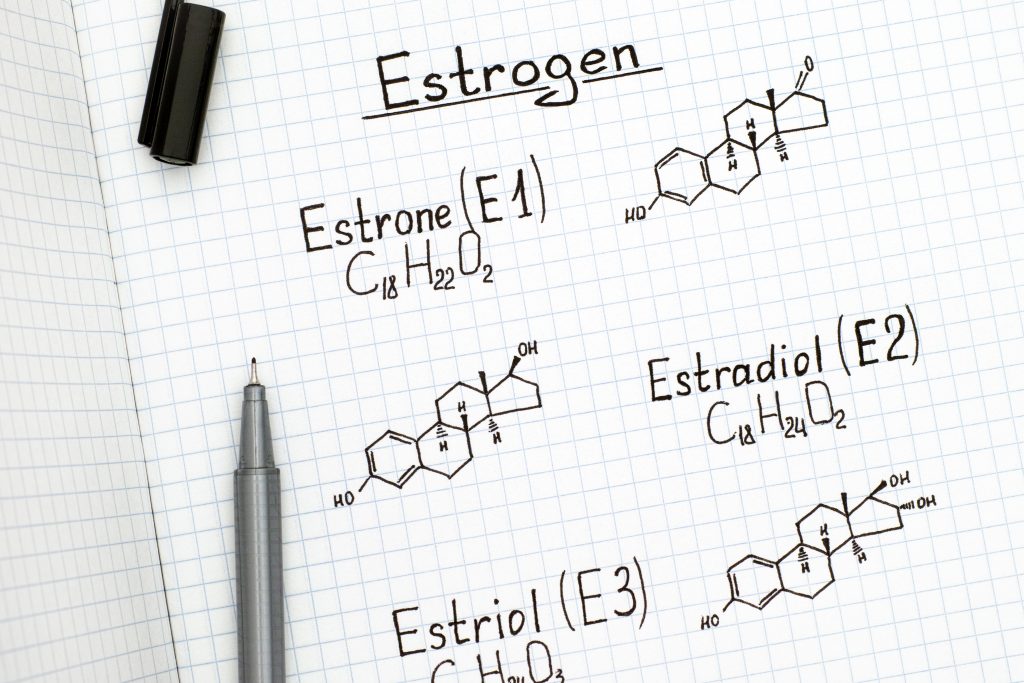
Estriol is one of three estrogens that our bodies make.  It is the gentlest of the estrogens and has great uses for anti-aging and bioidentical hormone replacement.   The three estrogens we make are Estrone, Estradiol, and Estriol. Estrone and estradiol are much stronger than estriol.  Here is a quick synopsis of estrone, estradiol, and estriol. Then I will go on to explain what and how estriol is used.   Estrone: This is more of an undesirable estrogen because it can create negative effects.  The goal is to have estrone at a lower ratio compared to estradiol and estriol. Some Common adverse effects of high levels of estrone are sugar cravings, weight gain, irritability and mood swings.  Higher levels of estrone can promote higher levels of undesirable metabolites such as 2OH-estrone and 4OH-estrone. Higher levels of these metabolites can contribute to reproductive cancers, particularly breast.  Estrone is more prominent in teens and is elevated until their bodies start cycling properly as they get older. Estrone is produced by our fat tissues and can convert into estradiol, which is the strongest form of estrogen in our bodies.    Estradiol: Estradiol as mentioned above, is by far the strongest of the three estrogens.  There is a good side and a bad side to estradiol. Estradiol has so many benefits for the body.  In excess because of its potency, estradiol can have many side effects. Estradiol is awesome for bone density. This is why so many women can fall prey to osteoporosis once they hit perimenopause and postmenopausal when the estradiol drops.  Estradiol is helpful in the cardiovascular system helping raise HDL (high-density lipoproteins), the beneficial cholesterol. It is also beneficial for memory and recall. Which is why in menopause so many women complain about their short-term memory.  As I mentioned, estradiol can be very potent. Estradiol likes to “grow things.” High levels of estradiol can exacerbate or promote uterine fibroids and fibrocystic breasts. Elevated levels of estradiol can cause weight gain, moodiness, PMS, heavy periods.           Estriol: Estriol is the weakest or most gentle of the estrogens.  Estriol circulates in low levels of the bloodstream in menstruating females.  It becomes much higher during pregnancy. Estriol is especially helpful for skin integrity and mucous membranes.  It is helpful in hormone replacement to balance estradiol side effects. Estriol can also be used in BHRT for women that cannot tolerate the strong potency of estradiol. Estrone, estradiol and estriol, the three main estrogens all stimulate the many estrogen receptors in our bodies.  As mentioned above estrone converts to estradiol. Having elevated levels of estrone can promote high levels of estradiol.  Estriol, on the other hand, does not convert to estradiol. Having higher levels of estrone or estradiol can promote Estrogen Dominance.   If you would like to read more about Estrogen Dominance, check out our blog: ‘What Does Estrogen Dominance Feel Like?’. Estrone stimulates the estrogen receptor moderately, while estradiol has a very strong effect on the receptor.  Estriol, like the other estrogens, stimulates estrogen receptors. But it does so more weakly than estrone and estradiol. For example, imagine a door is the “estrogen receptor.” Estrone will approach the door and knock firmly on the door to get someone inside to open it.   Estradiol is the strongest stimulator of estrogen receptors. So estradiol will pound on the door with a sledgehammer to get someone to open up. Back to estrone for a moment. If the door is not opened quickly enough for estrone, she gets a little tricky. Estrone will morph like a werewolf into estradiol and then go blow that door down.  Estriol is a weak stimulator of the estrogen receptors, will gently, quietly knock on the door. The interesting part here is, estriol while being a weak stimulator can provide a strong of an impact on the receptors. Meaning, say there is no estrogen/estradiol around due to menopause or total hysterectomy. Then estriol can stimulate the receptors gently providing estrogen stimulation to the body.  Now imagine there is a lot of estradiol and estrone around (as in Estrogen-Dominance). Estriol can go hang out at the door knocking softly while blocking the potent effects of estradiol and estrone. Even though it is the gentlest of the estrogens, doesn’t mean estriol is not effective for BHRT. How to Take Estriol? There are many ways to administrate estriol.  There are capsules, sublingual troches, creams, gels, vaginal suppositories.  You are not going to be able to get estriol from your local big pharmacy. Estriol can be found through compounding pharmacies.  Estriol is available online without a prescription. I am not familiar with the online brands. As I like to prescribe estriol from the compounding pharmacy, to keep track of exact doses, fillers, excipients, and forms of administration.  Below as I explain the uses of estriol, I will delve into some of the forms of administration for each application. What is Estriol Used For? Estriol is used for bioidentical hormone replacement (BHRT).  Estriol can be helpful for women going through symptoms of perimenopause and menopause.  Estriol is very beneficial for skin integrity and mucous membranes. It also stimulates estrogen receptors causing a gentle reaction for stimulating estrogen activity.  Based on this estriol has quite a few uses for women that I am going to describe below. Vaginal Atrophy:  After menopause, the ovaries cease to produce estrogen.  This is a natural transition of life. But one of the most common complaints I hear about is pain with intercourse.  The vaginal cells need estrogen to mature. Without estrogen, the vaginal cells are what is called, parabasal cells. These are immature vaginal cells.  Commonly on a pap smear in a postmenopausal female, the report will read, predominantly parabasal cells. This causes pain with intercourse, sometimes even bleeding with intercourse because the tissues are so fragile. I have had women that cannot have penetration because of vaginal atrophy. Conventionally gynecologists or your primary care will give you estradiol to apply topically to the vaginal cells. As mentioned above, estradiol is quite

Read More
Bioidentical Progesterone Capsules vs Cream?

Progesterone is often used in hormone replacement therapy.  It is used for women of all ages, from teens to postmenopausal.  Bioidentical progesterone is safe and effective for symptoms of hormone imbalance such as PMS, Perimenopause, and Menopause. Often there is confusion over using a progesterone cream or capsule. Some say that cream is better.  Others say that progesterone capsules are better. Either way, both are good, it depends on the hormone goals, the person, and the symptoms they are trying to resolve. What Progesterone is not: One main issue that needs to be clarified, synthetic progestins are not bioidentical.  These include Progestin, birth control pills, Provera, Depo-Provera (medroxyprogesterone) injection, oral Micronor, Nor-QD (norethindrone). For this post, I am talking about bioidentical progesterone capsules vs cream. Progesterone that looks exactly like the progesterone we make in our bodies. Often, progestins get passed off as being the same as bioidentical progesterone. The synthetic progestins are 180 degrees different from bioidentical progesterone. Progesins often have undesirable side effects such as wegiht gain, where as bioidentical progesterone capsules or creams tend to be very well tolerated with minimal side effects.  Oral Forms of Progesterone: There are several forms of oral progesterone: Instant release compounded micronized progesterone capsules: Compounded medications will come from a compounded pharmacy.  Instant release capsules, upon oral ingestion will go instantly into your bloodstream. You can make any dose you want with a compounding pharmacy.  I have had compounding pharmacies make as low at 12.5mg of progesterone capsules. Sustained release compounded micronized progesterone capsules:  I used sustained release more often than instant release progesterone oral capsules.  Oral progesterone is relaxing and good for sleep. Sometimes the instant release can make a woman quickly tired after taking it.  Many women with low progesterone have trouble staying asleep. They find themselves waking multiple times a night. Or they wake up in the middle of the night for hours.  The sustained release helps a woman stay asleep throughout the night. Prometrium capsules:  Prometrium is a bioidentical progesterone that is commercially available.  Meaning you can get it from your local big box pharmacy. It is bioidentical, is not a progestin and it is not synthetic.  Prometrium is made from peanut oil. You do not want to take progesterone if you are allergic to peanuts. Prometrium is an instant release oral progesterone.  Meaning when you ingest it, it is immediately released into your bloodstream. Prometrium only comes in a 100mg or 200mg capsule. These two doses puts limitations on dosing for a woman with low progesterone.  If they do fine with 100 or 200 mg instant release and are not sensitive to peanuts, Prometrium is fine for them. Often I might cycle different doses of progesterone in the month. Some women need a lower doses such as 75 mg or in between at 125-150 mg capsules. Progesterone creams: I prescribe progesterone creams through a compounding pharmacy.  There are over the counter progesterone creams available from many different companies.  I am not familiar with all the companies that have progesterone available without a prescription.  I cannot comment on a particular brand of progesterone cream. For this post, I am going to talk about my experience using progesterone creams from a compounding pharmacy.   Progesterone creams from a compounding pharmacy can come in any dosing you need.  Most do not go any higher than 200mg per gram with 100mg per gram being the most common. They will come in little jars with spoons, in pumps and clickers to dispense the cream. I do like the topiclick containers.  As they are easy to see when you are running out. Are not exposed to the air so will stay free of dirt and debris. And you can travel with them.   Progesterone creams are absorbed through the skin, called transdermal.  When you apply a cream, you want to make sure you do not share it with anyone else.  If you apply your progesterone cream to your inner arms, you have the potential to get it on others.  If you carry a baby, let your dogs lick you or give hugs, these are all ways you can transfer your progesterone to others.  If you apply it to your bum and sit on the toilet seat, others will inadvertently absorb your progesterone. Again, with creams, you must be careful not to share it.  You can apply your progesterone cream to your inner thigh. The inner thigh usually is a safe place that you do not have to worry about getting the cream on others.   Not everyone absorbs the transdermal creams the same.  Some people have thicker skin, and others do not absorb creams.  If that is the case, your compounding pharmacy can add a little DMSO to the cream.  DMSO easily passes through membranes. Meaning it can help carry hormones through the skin.  Just make sure your skin is clean before you apply your progesterone cream that had DMSO added to it.  Do not combine your own over the counter progesterone cream with DMSO that you bought separately. It is a specific process for the compounding pharmacy to combine a very very very small amount of DMSO to the progesterone.  And it is even more specific to make sure the DMSO is fully immersed and mixed with the progesterone. Whether you use a bioidentical progesterone capsule or cream depends on your goals.  When using HRT every female has different goals. Progesterone BHRT is common for menopausal symptoms with estrogen.  Some use progesterone for heavy bleeding or for mood. Below is a list of symptoms that progesterone is helpful for: Menopause Perimenopause Mood Heavy bleeding Irritable Trouble staying asleep Anxiety Midcycle spotting due to low progesterone First 8-12 weeks (9 weeks) of pregnancy for low progesterone Teens PMS PCOS The number one reason you would use a capsule over a cream: If a woman is on estrogen therapy and has a uterus, you must use a progesterone capsule.  Estrogen therapy is great for menopause and low estrogen symptoms. But if you are

Read More
What is the Difference Between Biest vs Estradiol?

Estradiol and biest are used typically for hormone replacement.  They are both forms of estrogen and used for symptoms of low estrogen.  Commonly they are used for menopause. The average age of menopause is 51.5 years old, although symptoms could start as early as the 40’s.  The gradual decline of ovarian function can cause symptoms in which estrogen is helpful. In surgical-menopause, the uterus and ovaries are removed, is a different story.  When the ovaries are removed, instantly puts a woman into menopause. In menopause, there is a decline of the sex hormones over time. But in surgical menopause, a woman goes from having a good amount of sex hormones to having none.  This instant transition can cause instant intense menopausal/low estrogen symptoms. Estrogen is also good for bone density.  Incorporating diet, lifestyle, and supplementation with estrogen can help preserve and improve bone density.  After removal of the uterus and ovaries (surgical menopause), it can be beneficial to provide estrogen hormone therapy to protect bone density.  Especially if the surgical removal of the ovaries happens to a younger female such as the 30’s. Estrogen and hormone replacement are also used for libido, skin integrity, anti-aging, cognition, sleep, hot flashes, night sweats and vaginal atrophy. Estrogen hormone replacement can be helpful.  But deciding on what type, dose, the vehicle of administration for an individual can be a bit more challenging.  Estrogen hormone replacement therapy is not “one dose fits all.” It needs to be tailored to that particular female depending on her goals, personal and family history and especially if she has a uterus.  You do not want to do any kind of estrogen hormone replacement without progesterone if a female has a uterus. Estrogen replacement alone without progesterone can put a woman at risk for uterine cancer and spotting or bleeding. Progesterone (bioidentical) is helpful for the body in many ways, but that is for another post.     First I would like to start off by explaining what estradiol and Biest are: What is Estradiol? We make three estrogens in our bodies.  Those are estrone, estradiol, and estriol.   Estrone: Estrone is an undesirable estrogen.  We tend to make more of it as teens that have just started their periods.  Estrone is also made by our fat tissues. Having too much estrone can cause unwanted symptoms such as irritability, moodiness, increase appetite/cravings for sugar, easy weight gain.   Estradiol: Estradiol is the strongest of the three estrogens.  Estradiol is helpful for maintaining and building bone density. Estradiol is good for the cardiovascular system.  It can help raise HDL (high-density lipoproteins), which is the desirable/”good” cholesterol. Estradiol is great for the brain and memory recall.  In menopause, one main symptom is low memory recall. Many women report they will forget what they were saying mid-sentence. If asked a question, it feels like the answer is in there, but won’t come out. Blurting out the answer 2-15 minutes later. Low levels of estradiol in menopause is what causes the hot flashes and night sweats. Estradiol is also involved in female libido. Estradiol is what runs the ship for female sex drive.  It is commonly thought that testosterone is for sex drive. Testosterone can be excellent for male libido, but it only has a slight effect on women. Honestly, for us ladies, it is about the estradiol when it comes to sex drive, thinking about and initiating sex. Estriol: is the weakest or most gentle of the estrogens.  Estriol is helpful for skin and mucous membranes. Estradiol is conventionally used to treat vaginal atrophy.  But I find estriol is much better for vaginal dryness and pain with intercourse from atrophy. Estriol is the unsung hero when it comes to the estrogens as it can help balance estradiol.   As mentioned above, estradiol is quite strong.  Sometimes estradiol can take over the entire hormonal show.  Causing uterine bleeding, moodiness, weight gain, tender swollen breasts and trouble sleeping.  Estriol is excellent to rein in and balance the negative effects of estradiol. I have also found estriol to be helpful for urinary incontinence.  The urethra can become lax when estrogen levels drop. This can cause urine leaking with coughing, laughing, exercise. Or when it is time to go, hurry up and find a bathroom because there is no leeway.    Back to Estradiol: Estradiol treatment for low estrogen levels is a bioidentical form of hormone replacement (BHRT).  Estradiol hormone replacement comes in many forms. Oral: Oral estradiol used to be popular in the early 2000’s and is still used occasionally today.  Oral estradiol can be appropriate for the particular individual. But can be hard on the liver and can create estrogen metabolites such as 2OH estrone and 4OH estrone which in high levels are not healthy to the body.  If oral estradiol is appropriate for a particular female, then close observation of the liver enzymes and estrogen metabolites are necessary. Patch: Estradiol patches are currently very common for estradiol bioidentical hormone replacement.  Patches come in different dosing and are applied twice weekly. Patches are easy to use as you just slap it on twice a week.  The drawback is the estradiol levels tend to be quite high after first application and then dwindle fast over the next 2-3 days.  Some women complain or the patch getting dirty, falling off and wary of swimming or taking baths because it will fall off. While it is easy to apply, it is hard to finesse the perfect balance of BHRT.  There are only three doses available making it more like a one size fits all. Creams/gels: These are similar to patches, they are transdermal, and the estradiol will go through the skin into the bloodstream.  Transdermal estradiol is not hard on the liver like oral forms of estradiol are. Although they usually need to be applied once to twice a day, compliance can be an issue.  Also, care is needed to make sure that the cream is applied to a part of the body that will not transfer to others. Usually,

Read More